Editar el contenido

Education
EON-XR Examples

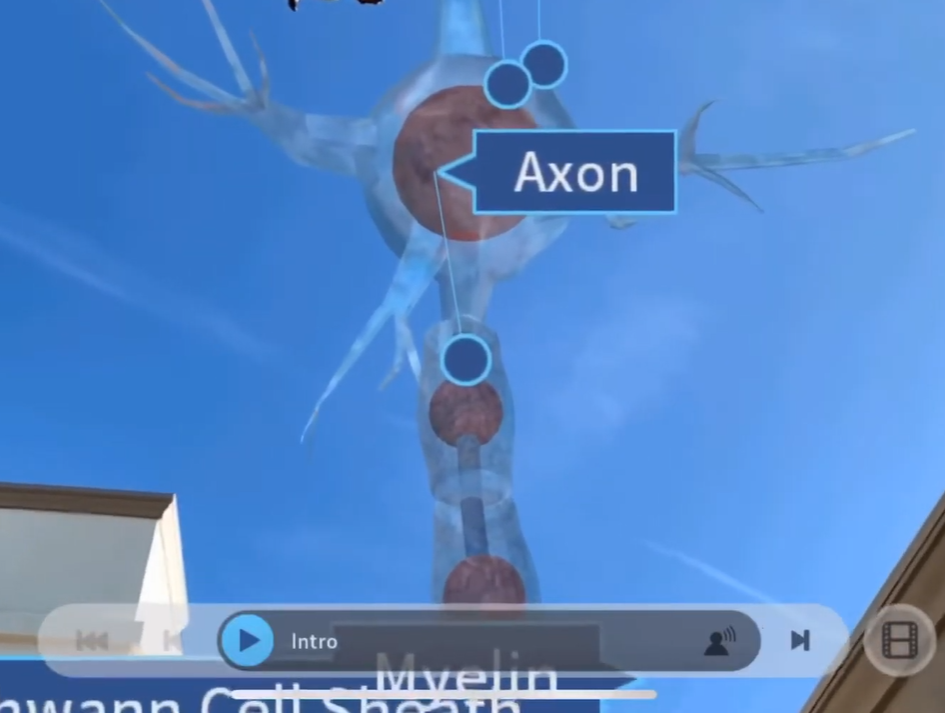
AR: Brain Cell Function

Using EON Reality’s augmented reality solutions learn remotely about the details and functions of a human brain cell.

A neuron, or nerve cell, is an electrically excitable cell that communicates with other cells via specialized connections called synapses. It is the main component of nervous tissue in all animals except sponges and placozoa. Plants and fungi do not have nerve cells.

Neurons are typically classified into three types based on their function. Sensory neurons respond to stimuli such as touch, sound, or light that affect the cells of the sensory organs, and they send signals to the spinal cord or brain. Motor neurons receive signals from the brain and spinal cord to control everything from muscle contractions to glandular output. Interneurons connect neurons to other neurons within the same region of the brain or spinal cord. A group of connected neurons is called a neural circuit.

AR Virus Study

A self directed lesson through Eon Reality’s EON-XR Platform – An influenza pandemic is an epidemic of an influenza virus that spreads on a worldwide scale and infects a large proportion of the world population. In contrast to the regular seasonal epidemics of influenza, these pandemics occur irregularly. There have been five influenza pandemics during the last 140 years, with the 1918 Spanish flu pandemic being the worst; this pandemic is estimated to have been responsible for the deaths of 50–100 million people. The most recent, the 2009 swine flu pandemic, resulted in under a million deaths and is considered relatively mild.

AR Space Craft Expedition to Mars

This AR remote lesson allows users to engage in immersive learning through EON Reality’s EON-XR Platform.

The hypothetical colonization of Mars has received interest from public space agencies and private corporations, and has received extensive treatment in science fiction writing, film, and art.

Organizations have proposed plans for a human mission to Mars, the first step towards any colonization effort, but no person has set foot on the planet. However, landers and rovers have successfully explored the planetary surface and delivered information about conditions on the ground.

Reasons for colonizing Mars include pure curiosity, the potential for humans to provide more in-depth observational research than unmanned rovers, economic interest in its resources, and the possibility that the settlement of other planets could decrease the likelihood of human extinction. Difficulties and hazards include radiation exposure during a trip to Mars and on its surface, toxic soil, low gravity, the isolation that accompanies Mars’ distance from Earth, a lack of water, and cold temperatures.

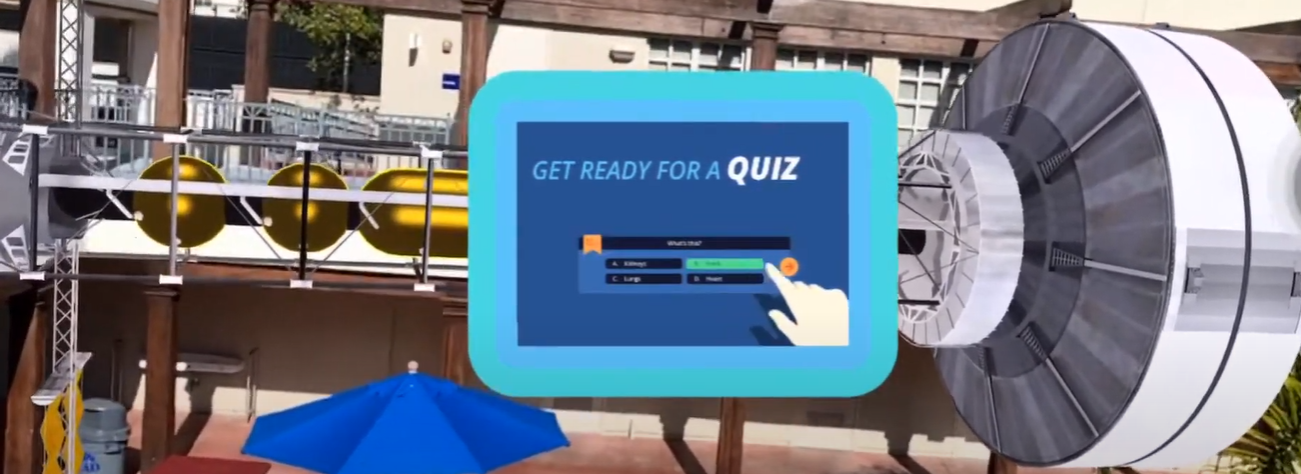
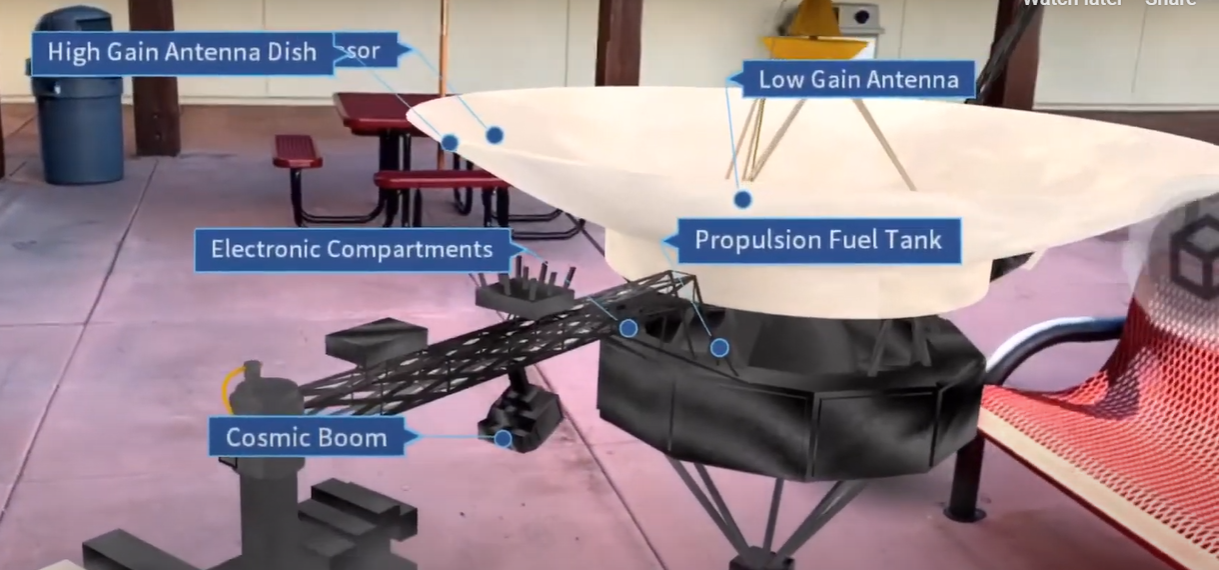
Voyager 1 in AR

Educational freedom is made possible through distance learning on EON Reality’s virtual based EON-XR Platform.

Voyager 1 is a space probe that was launched by NASA on September 5, 1977. Part of the Voyager program to study the outer Solar System, Voyager 1 was launched 16 days after its twin, Voyager 2. Having operated for 42 years, 9 months and 1 day as of June 6, 2020, the spacecraft still communicates with the Deep Space Network to receive routine commands and to transmit data to Earth. Real-time distance and velocity data is provided by NASA and JPL. At a distance of 148.61 AU (22.2 billion km; 13.8 billion mi) from Earth as of March 12, 2020, it is the most distant human-made object from Earth.

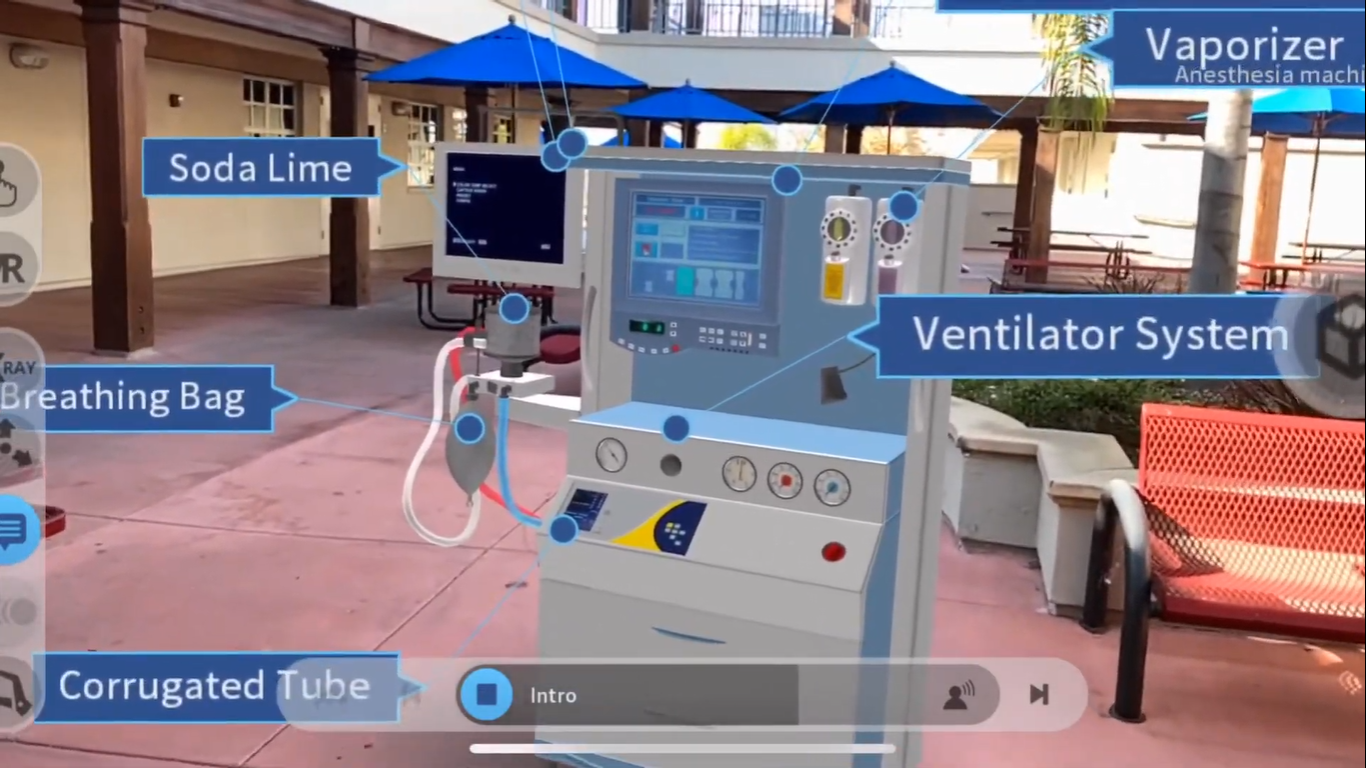
AR for Frontline Nurses

This AR lesson allows nurses to participate in remote medical learning, the lesson specifically focuses on the intricacies of an anesthesia machine.

The anesthesia machineis a medical device used to generate and mix a fresh gas flow of medical gases and inhalational anaesthetic agents for the purpose of inducing and maintaining anaesthesia. The machine is commonly used together with a mechanical ventilator, breathing system, suction equipment, and patient monitoring devices; strictly speaking, the term “anaesthetic machine” refers only to the component which generates the gas flow, but modern machines usually integrate all these devices into one combined freestanding unit, which is colloquially referred to as the “anaesthetic machine” for the sake of simplicity. In the developed world, the most frequent type in use is the continuous-flow anaesthetic machine or “Boyle’s machine”, which is designed to provide an accurate supply of medical gases mixed with an accurate concentration of anaesthetic vapour, and to deliver this continuously to the patient at a safe pressure and flow. This is distinct from intermittent-flow anaesthetic machines, which provide gas flow only on demand when triggered by the patient’s own inspiration.

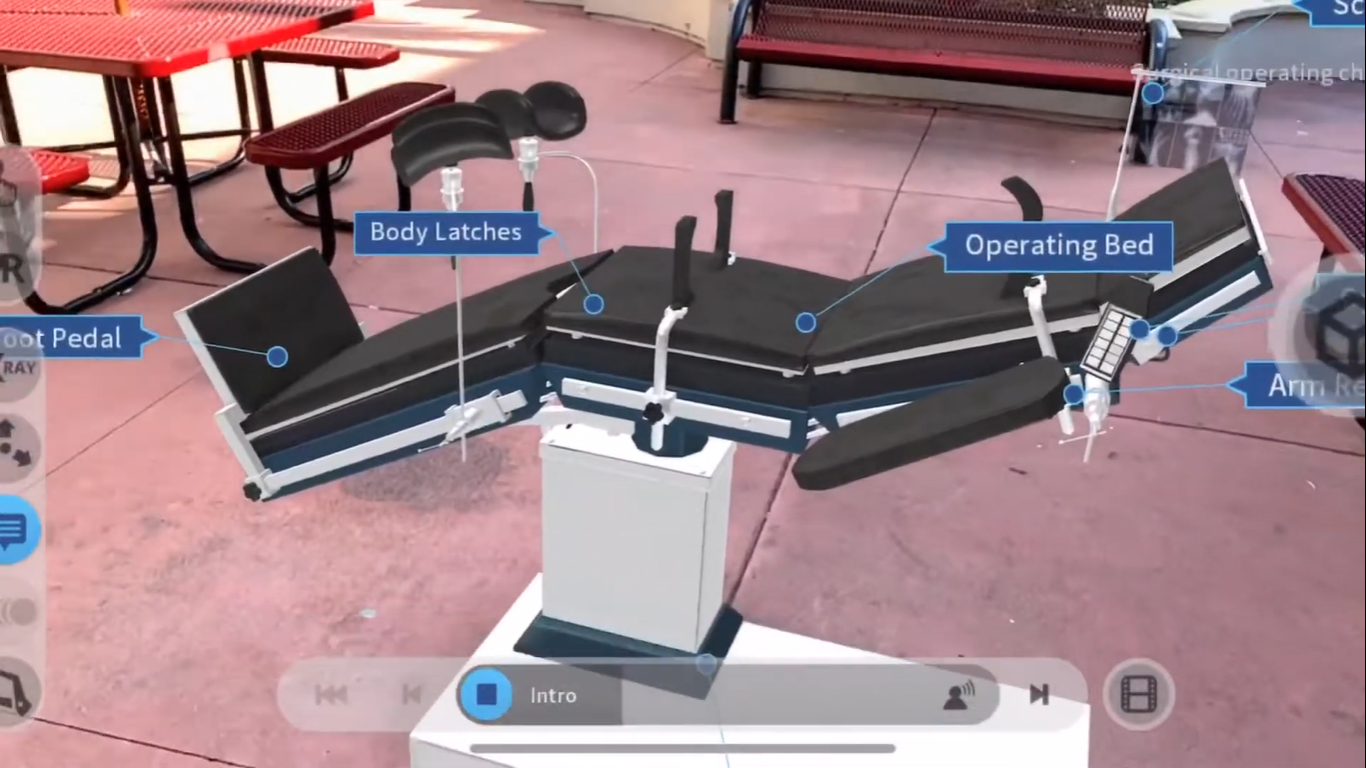
AR Surgical Table

The EON Reality EON-XR Platform caters to hands on medical training through immersive learning and content. This lesson focuses on the details of a surgeons table.

An operating table system is basically made up of three components: an operating table column, the table top and the transporter. Modern operating table systems are available as both stationary and mobile units. There are a wide range of table tops that can be used for both general surgery and for specialist disciplines. Mobile operating tables, however, tend to be equipped with a specific discipline in mind. The base, column and table top form a unit. Since the table column for a stationary operating table system is firmly anchored to the floor, the additional necessary medical devices can easily be brought to the operating area and positioned. These devices include, for example, x-ray equipment, which can easily be slid under the table top. For personnel, the system offers improved leg space since disruptive foot geometry is no longer present.


AR Hummingbirds

EON Reality’s EON-XR Platform is partly centered around virtual learning to provide users with a remote and immersive educational experience.

Hummingbirds are birds native to the Americas and constituting the biological family Trochilidae. They are the smallest of birds, most species measuring 7.5–13 cm (3–5 in) in length. The smallest extant bird species is the 5 cm (2.0 in) bee hummingbird, which weighs less than 2.0 g (0.07 oz).

They are known as hummingbirds because of the humming sound created by their beating wings, which flap at high frequencies audible to humans. They hover in mid-air at rapid wing-flapping rates, which vary from around 12 beats per second in the largest species, to in excess of 80 in some of the smallest. Of those species that have been measured in wind tunnels, their top speeds exceed 15 m/s (54 km/h; 34 mph) and some species can dive at speeds in excess of 22 m/s (79 km/h; 49 mph).

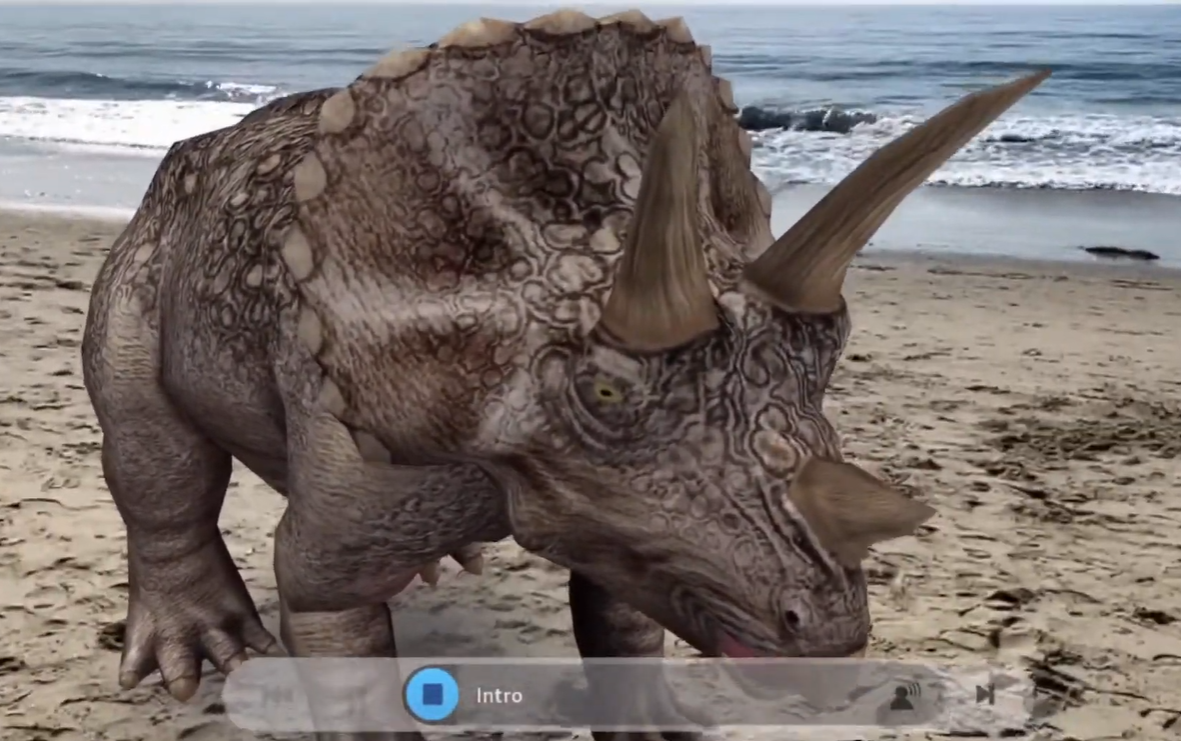
AR Triceratops

Take part in your own remote classroom where you can learn about the Triceratops through EON Reality’s immersive EON-XR Platform.

Triceratops is a genus of herbivorous ceratopsid dinosaur that first appeared during the late Maastrichtian stage of the late Cretaceous period, about 68 million years ago (mya) in what is now North America. It is one of the last known non-avian dinosaur genera, and became extinct in the Cretaceous–Paleogene extinction event 66 million years ago. The name Triceratops, which literally means “three-horned face”, is derived from the Ancient Greek words τρί- (tri-) meaning “three”, κέρας (kéras) meaning “horn”, and ὤψ (ōps) meaning “face”.

Triceratops has been documented by numerous remains collected since the genus was first described in 1889 by Othniel Charles Marsh. Specimens representing life stages from hatchling to adult have been found. As the archetypal ceratopsid, Triceratops is one of the most popular dinosaurs, and has been featured in film, postal stamps, and many other types of media.

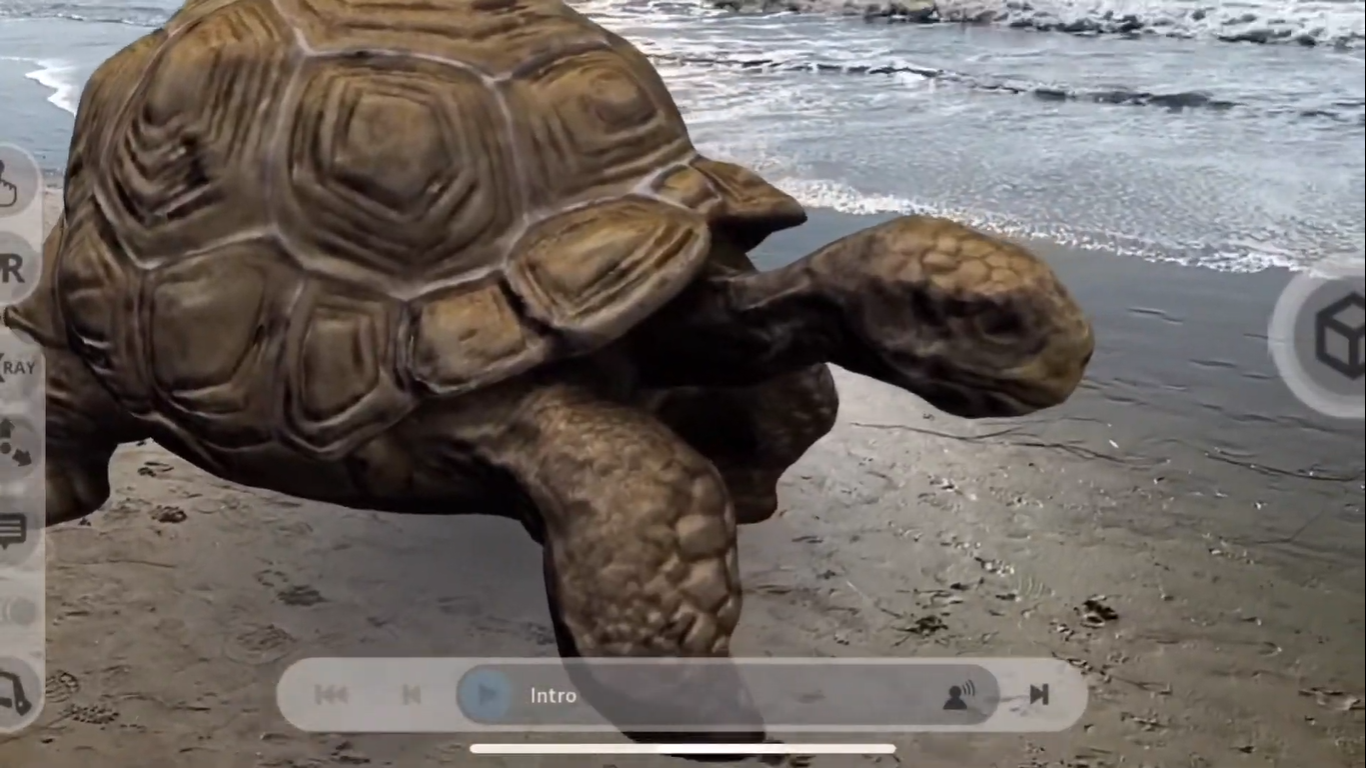
AR Giant Tortoise

Educate yourself on giant tortoises by interactive learning with augmented reality on EON Reality’s immersive EON-XR Platform.

Giant tortoises are among the world’s longest-living animals, with an average lifespan of 100 years or more. The Madagascar radiated tortoise Tu’i Malila was 188 at death in Tonga in 1965. Harriet (initially thought to be one of the three Galápagos tortoises brought back to England from Charles Darwin‘s Beagle voyage but later shown to be from an island not even visited by Darwin) was reported by the Australia Zoo to be 176 years old when she died in 2006. Also, on 23 March 2006, an Aldabra giant tortoise named Adwaita died at Alipore Zoological Gardens in Kolkata. He was brought to the zoo in the 1870s from the estate of Lord Clive and is thought to have been around 255 years old when he died. Around the time of its discovery, they were caught for food in such large numbers that they became virtually extinct by 1900. Giant tortoises are now protected by strict conservation laws and are categorized as threatened species

Suscríbase para recibir nuestras últimas actualizaciones

Receive the latest news

Sign Up Today!

Be the first to know the latest in AI-assisted XR-based technology for learning and training,
Stay ahead of the curve. Sign up today.