Edit Content

Education
EON-XR Examples

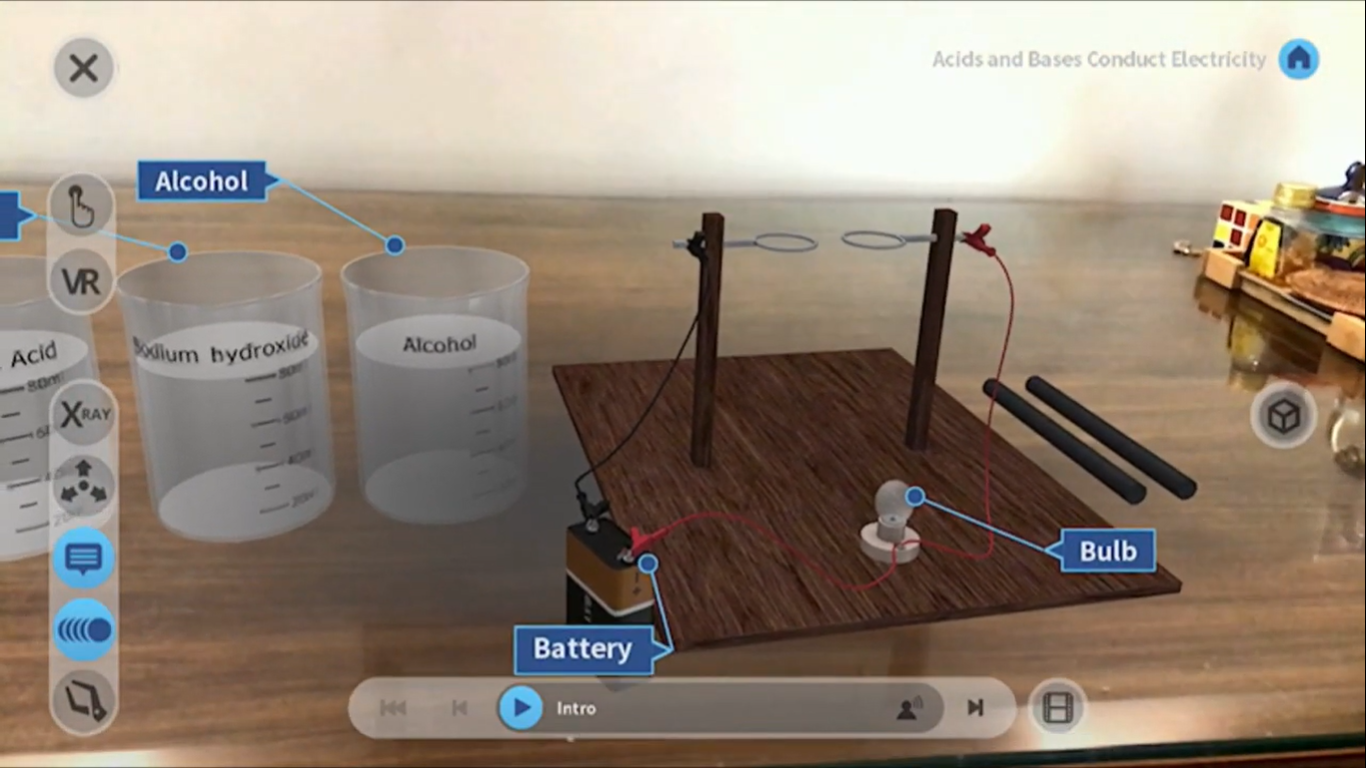
Hands on Virtual Lab: The Conductivity of Acids

EON-XR allows anyone to create their own hands on lab to simulate experiments at home! In our range of lab lessons, students can probe into a solution to measure the pH, or put in the electrodes to measure the conductivity. In this virtual lab lesson, students can now test the conductivity of various solutions with a light bulb apparatus at home.

Utilizing an acid and a base to generate electricity is a valuable experience for students to realize the importance of electrochemical power sources and develop fundamental knowledge related to energy and electrochemistry.

Using EON-XR, you can now create your own custom lab experiments and lessons utilizing our vast library of more than 1 million assets for remote learning.

Delve into and access the virtual experiment on EON-XR today.
Related:

Virtual Lab for Chemistry Students

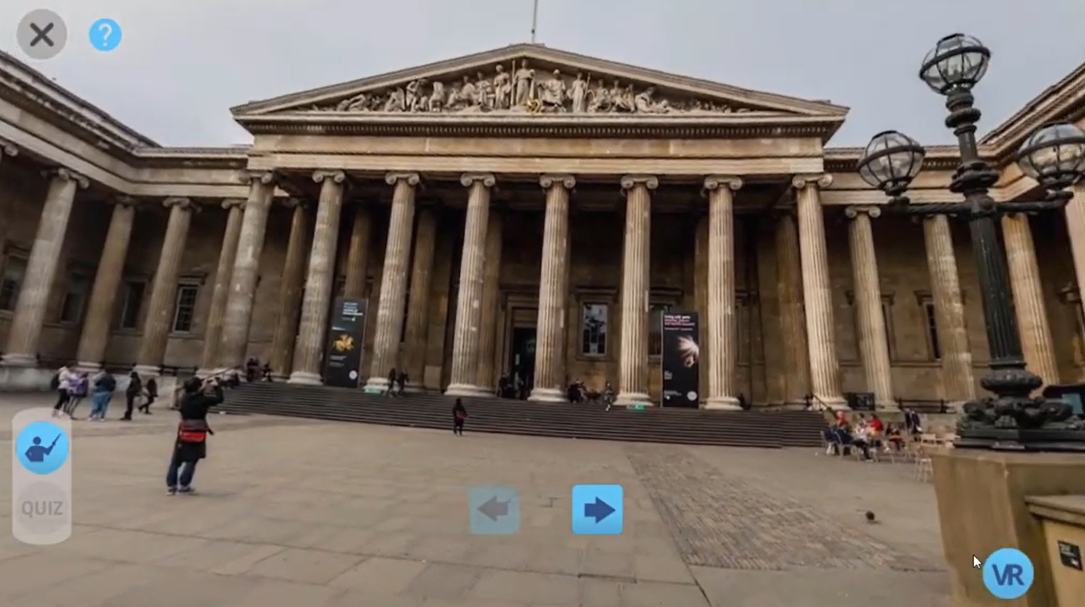
Explore the British Museum in 360º Immersion

Explore the British Museum in our 360º immersive lesson, which is home to a permanent collection of more than 800 million works. First opened in 1759, it was the first of its kind to open to the public in the whole world. Located in the Bloomsbury area of London, the museum welcomes more than 6 million visitors  through its doors each year.

In this immersive lesson, you too can get up close with the collection of prized art and objects. At your own leisure, take your time to browse through the highlights in the vast collection spanning more than 2 million years of human history, art and culture right here on EON-XR.

Explore the British Museum in a virtual visit on our EON-XR Platform today!

Related:

Our Top History Lessons Created on EON-XR

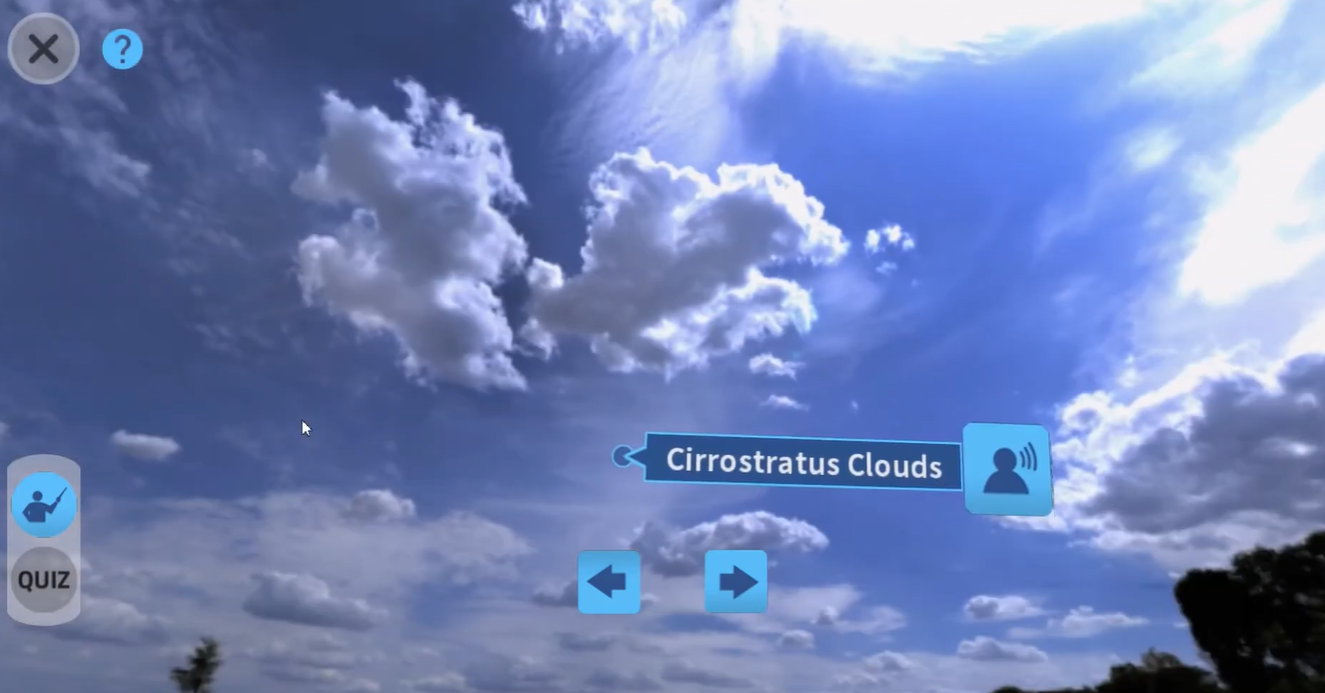
Clouds, Explained – A 360º Lesson on Cloud Science

In this immersive lesson on cloud science designed for the K12 classroom, students can now learn to recognize different cloud types and explain in their own words how clouds form.

Clouds are given different names based on their shape and their height in the sky. Some clouds are puffy like cotton while others are grey and uniform. Some clouds are near the ground, while others are near the top of the troposphere. The immersive lesson shows where different types of clouds are located in the sky.

No matter what shape or size they are, clouds are essential to life on Earth. During the day they help protect us from the sun’s intense heat. At night they act as a blanket to keep us from getting too cold. They also provide precipitation and signal weather changes and patterns.

But clouds aren’t unique to our planet. Astrophysicists who study atmospheres on other planets know that Mars, for example, has clouds similar to ours. Continuing to learn about weather on other worlds, they believe, will help us better understand—and predict—our own.

View and experience this hands-on  immersive 360º lesson on cloud science today.

Related Lessons

Learn about the Biosphere for a Sustainable Future

Immersive Stargazing Experience in 360º

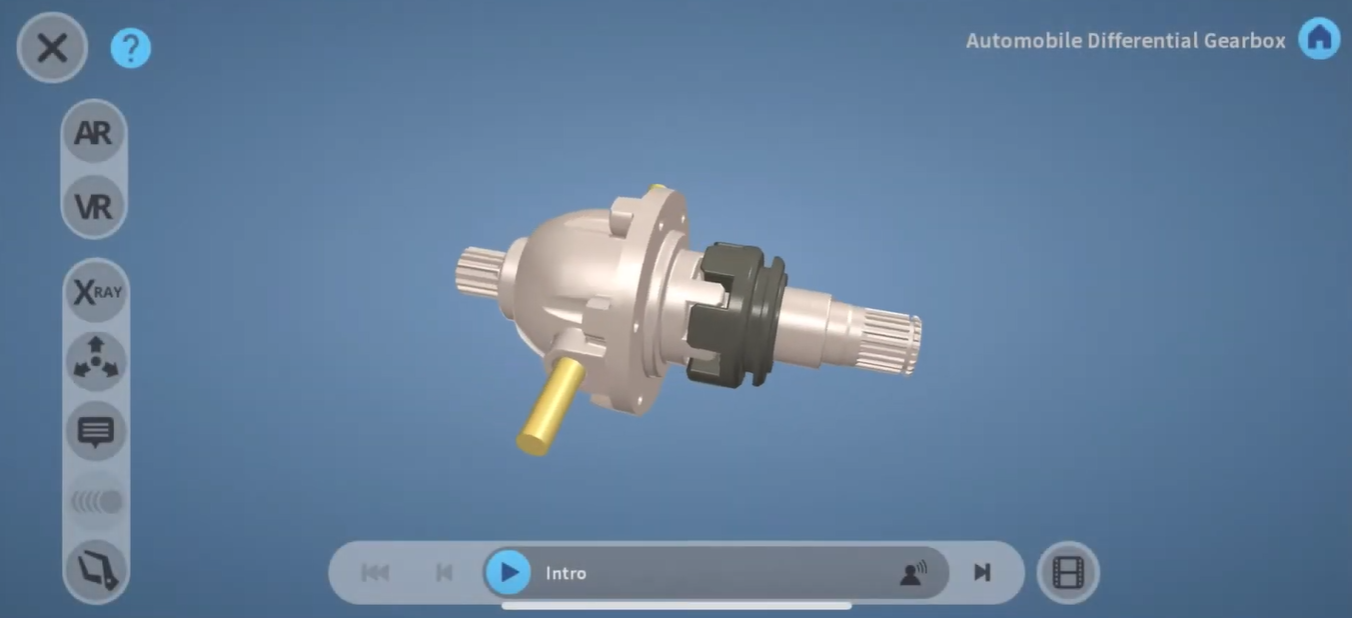
What’s the Diff? The Function of the Differential Gearbox

What is a differential gearbox and what do they do? And how do the individual parts actually do their job? In this lesson, students are introduced to an important engineering element in AR/VR—the differential gearbox.

As part of a lesson series created by the University for Business and Technology, this interactive 3D lesson module on EON-XR distills  a complex topic into an easily understandable visual lesson. Starting with a visual introduction of why a differential is necessary, it allows a student to easily process what’s going on underneath the skin of the car. While there are a handful of different kinds of differentials in use today, the underlying principal remains the same for mechanical differentials.

At the end of the lesson, students are able to

1. Identify the components and explain the functions and the maintenance procedures for differentials

2. Identify differential design variations.

3. Describe the principles of the  differential.

4. Understand basic service and repair of a differential.

This lesson was created as part of the EON Reality Self-Directed Learning initiative at the University for Business and Technology, allowing for deeper learning through immersion and student created content.

Experience this hands on, immersive lesson on EON-XR today.

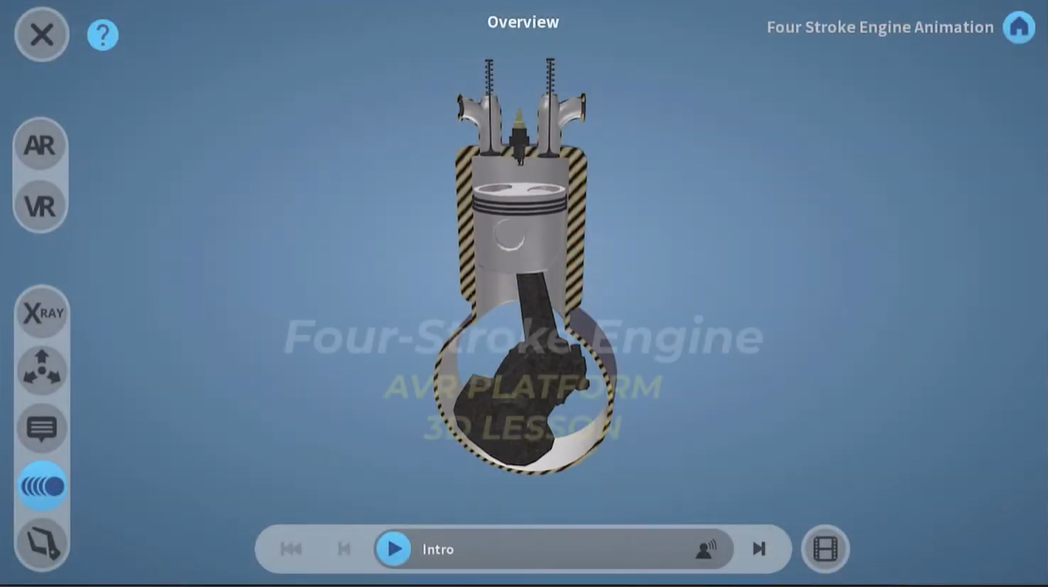
How Does a Four Stroke Engine Work?

A four stroke engine is a very common variation of an internal combustion engine. Most modern internal combustion-powered vehicles are four strokes, powered by either gasoline or diesel fuel. During engine operation, pistons go through four events to achieve each power cycle. The definition of an event is an up or down piston motion. Upon completion of the four events, the cycle is complete and ready to begin again.

What are the four events?

  1. Intake stroke: The piston moves downward to the bottom, this increases the volume to allow a fuel-air mixture to enter the chamber.
  2. Compression stroke: The intake valve is closed, and the piston moves up the chamber to the top. This compresses the fuel-air mixture. At the end of this stroke, a spark plug provides the compressed fuel with the activation energy required to begin combustion.
  3. Power Stroke: As the fuel reaches the end of it’s combustion, the heat released from combusting hydrocarbons increases the pressure which causes the gas to push down on the piston and create the power output.
  4. Exhaust stroke: As the piston reaches the bottom, the exhaust valve opens. The remaining exhaust gas is pushed out by the piston as it moves back upwards.
Understanding how this  engine works and knowing some key related parts and terminology is important for working on any vehicle. In this lesson created by University for Business and Technology, students are introduced to basic four stroke  engine parts, theory and terminology and understand the operating principles of four stroke internal combustion engines. Experience the hands on, immersive lesson for yourself today or browse through our archive of applications for more classroom inspiration!

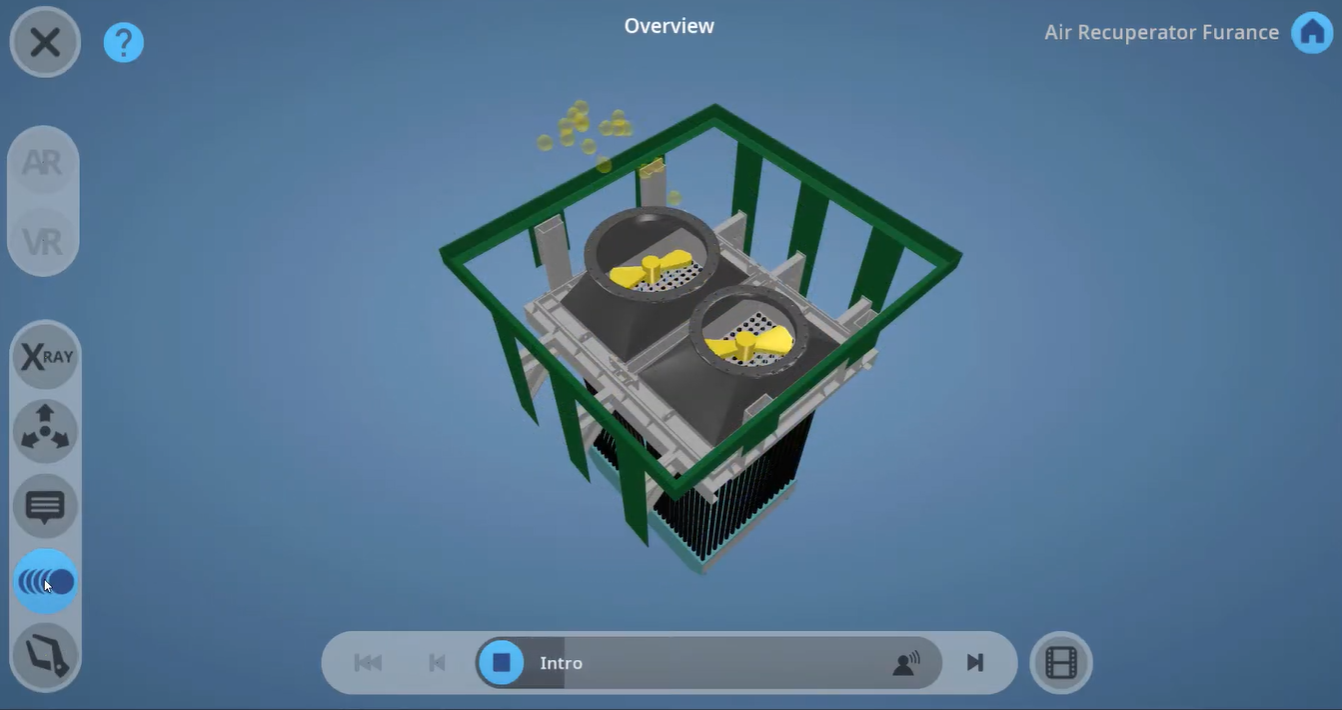
The Energy Saving Potential of Air Recuperators

In this lesson created by the University for Business and Technology, you can learn about the role that air recuperators can play in driving energy efficiencies and limiting greenhouse gas emissions.

Natural gas-fired process furnaces are widely used in industry, particularly in applications involving metallurgy, heat-treating, glass and ceramics. Even at today’s attractive rates for natural gas as an industrial fuel, it makes complete sense to recover as much of the waste heat from the furnace as possible to improve energy efficiencies. According to the U.S. Department of Energy, the recuperator is the most widely used heat recovery device.

In any furnace operation, heat is lost from the furnace skin, from heated product leaving the treatment area, from conveyer or pusher equipment, from excessive draft and from open doors or other access points. But easily the largest and most concentrated type of heat loss is from the furnace exhaust, some with temperatures of 1000° F or higher.  Fortunately, this is usually also the most practical heat to recover and reuse.

Learn about the structure and functions of the air recuperator and how you can install one in our hands on immersive lesson today.
World’s Largest Observatory: A 360º Immersive Lesson

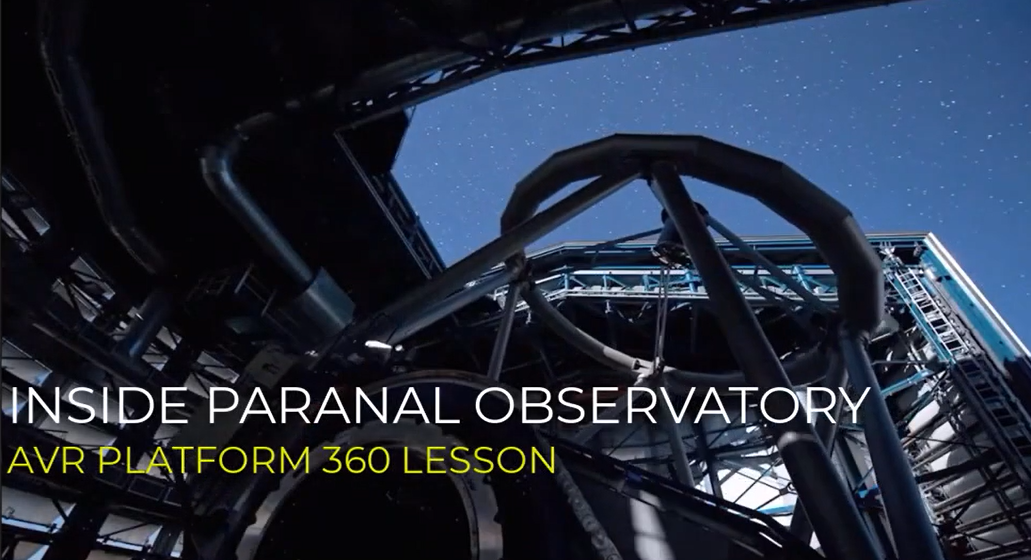
Students can now walk into the world’s largest observatory in 360º in an EON-XR Platform lesson created by the University for Business and Technology, Kosovo.

Located in the commune of Taltal and at 2635 metres above sea level in the Atacama Desert of Chile, ESO’s Paranal Observatory is one of the very best astronomical observing sites in the world. It plays host to several world-class telescopes; among them are the Very Large Telescope, the Visible and Infrared Survey Telescope for Astronomy, and the VLT Survey Telescope.

The impressive battery of top-ranking instruments, coupled with the enormous light-collecting power of the VLT and what is certainly the best overall efficiency for an observatory of this size, has provided a real research bonanza of outstanding scientific results, some of which have been true breakthroughs. They include the amazing new knowledge about the Black Hole at the Galactic Centre, the first image of an exoplanet, the discovery of the most distant group of galaxies, the detection of spatially resolved emission from an Active Galactic Nucleus, the study of resolved stellar populations in nearby galaxies among others

The only way to reach Paranal Observatory from Antofagasta airport is with your own transport, but anyone can now virtually visit the Obsevatory on EON-XR.Created by the University for Business and Technology in Kosovo as part of the Self-Directed Learning Initiative designed by EON Reality, students and teachers are now creating their own immersive lessons for active and peer learning.

To explore the Paranal Observatory, the world’s largest observatory  in an immersive 360º learning experience, please click here.

Electric Power System Immersive Lesson

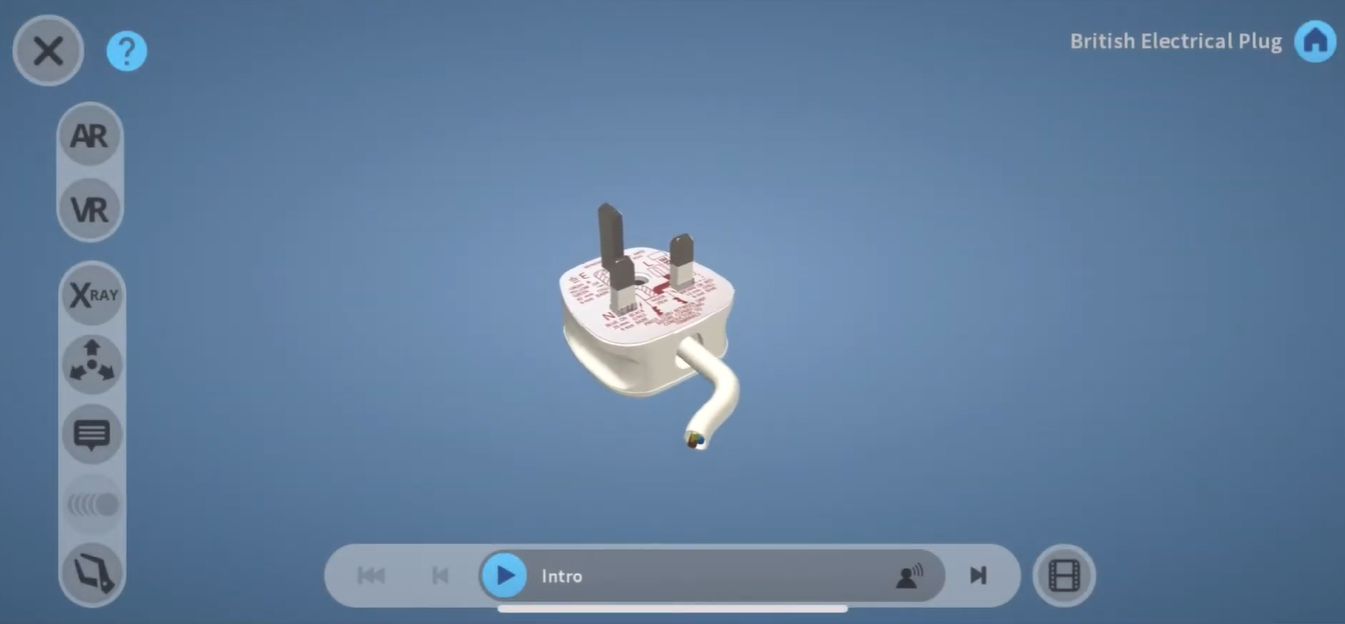
In this lesson created by the University for Business and Technology, students are introduced to the electric power system in an immersive lesson on EON-XR, from generation of the electricity all the way to the wall plug. Students can learn about that parts and purpose of the various parts of the plug including the different wires and fuse and when and why certain parts are necessary.

Many Electrical Engineering students go through their entire program of study without encountering the elementary practical aspects.Yet when such topics are taught, they lend themselves strongly to learning by doing; it is difficult to understand without a dominant hands-on component in the instruction. EON-XR presents a practical, economical alternative to address the need for wiring practice and discovery

Using EON-XR, students can now learn about the electrical code in a realistic fashion for an enhanced learning experience. This lesson was created by the University for Business and Technology as part of the Self-Directed Learning Initiative on EON-XR led by EON Reality. Through this initiative, students and teachers create their own immersive learning content as part of an active learning process, leading to deeper understanding through doing.

To experience the electric power system immersive lesson for yourself, please click here.

Immersive Stargazing Experience in 360º

Join students around the world in an immersive stargazing experience in 360º  to learn about the wonders of the night sky on EON-XR.

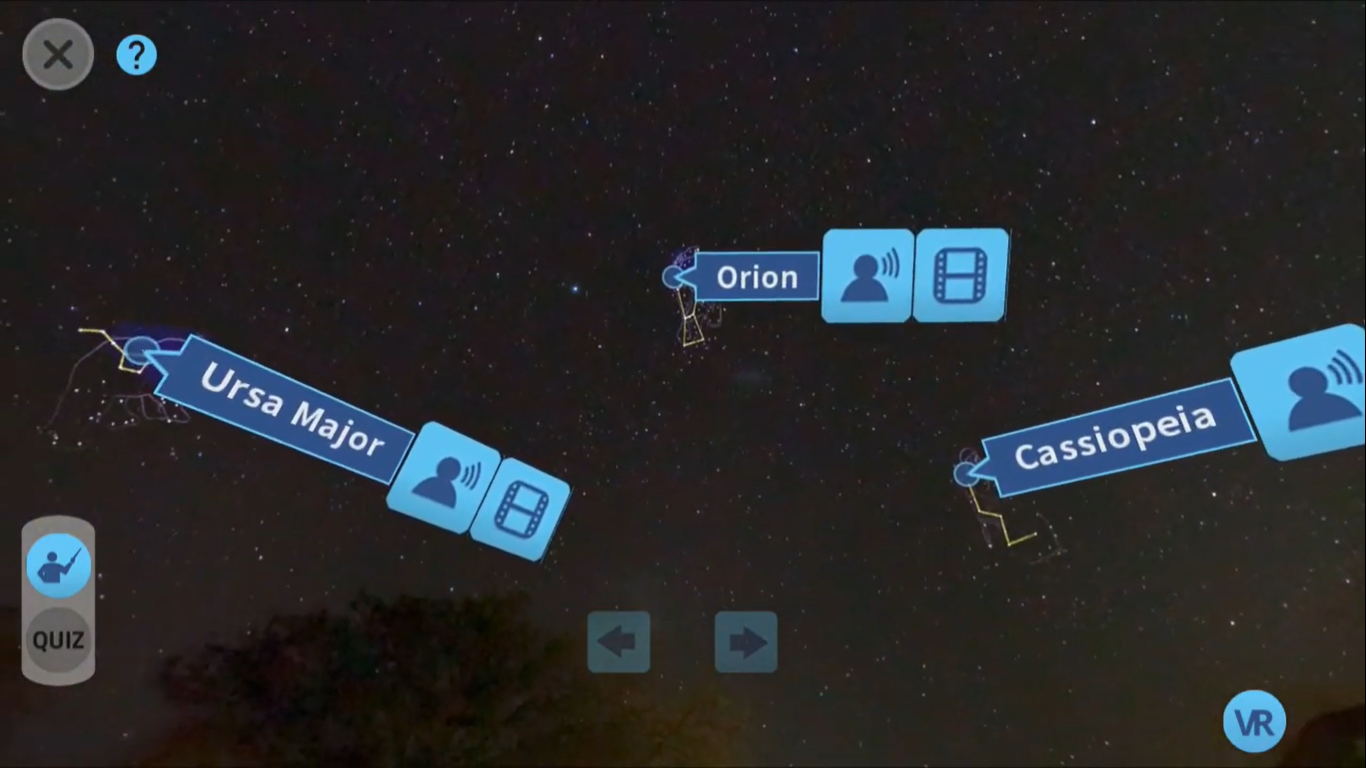
If you’re a newcomer to amateur astronomy, eager to begin exploring the night sky, you’ll have to overcome one of astronomy’s biggest hurdles — learning to identify the constellations. Trying to make sense of those myriad stellar specks overhead might seem intimidating, but EON-XR now makes it easier than ever to learn about these deep sky wonders.

In this 360º lesson, you can now learn to identify some of the most popular  constellations and locate them the next time you gaze upon the night sky.

To experience the immersive stargazing experience in 360º, please click here, or browse through our applications to find out how EON-XR can be used to turn any subject into an engaging learning experience!

Iscriviti per ricevere gli ultimi aggiornamenti da noi

Receive the latest news

Sign Up Today!

Be the first to know the latest in AI-assisted XR-based technology for learning and training,
Stay ahead of the curve. Sign up today.