Edit Content

Education
EON-XR Examples

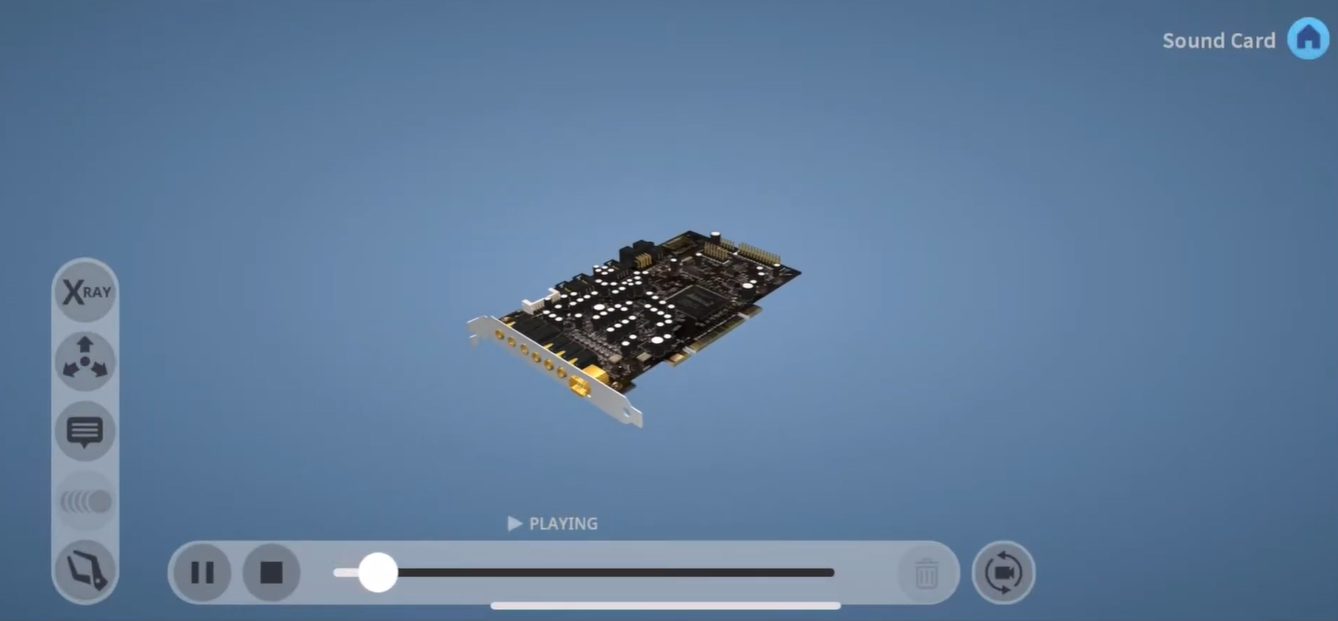
Anatomy of the Sound Card in AR and VR

Learn about the anatomy of the sound card in AR and VR, and trace the strange and long history behind the computer sound card.

The early sound cards have evolved greatly to the audio cards that we all know currently. While it might be hard to imagine a computer without sophisticated sound,  there was a time when sound cards were a luxury of the chosen few. In this immersive lesson created by the University for Business and Technology, students can now appreciate how much the computer sound card has evolved and the impact the evolution has had on the industry of computers.

Take a deeper dive into the anatomy of the sound card in AR and VR lesson by clicking here and understand how the sound card came to prominence and later faded into obscurity as modern computers continue to evolve.

Created wholly on EON-XR, these lessons created by the University for Business and Technology is part of the EON Reality’s self-directed learning initiative, encouraging active learning for deeper student understanding and engagement. For more lesson and classroom inspiration, please visit our lesson highlights section.
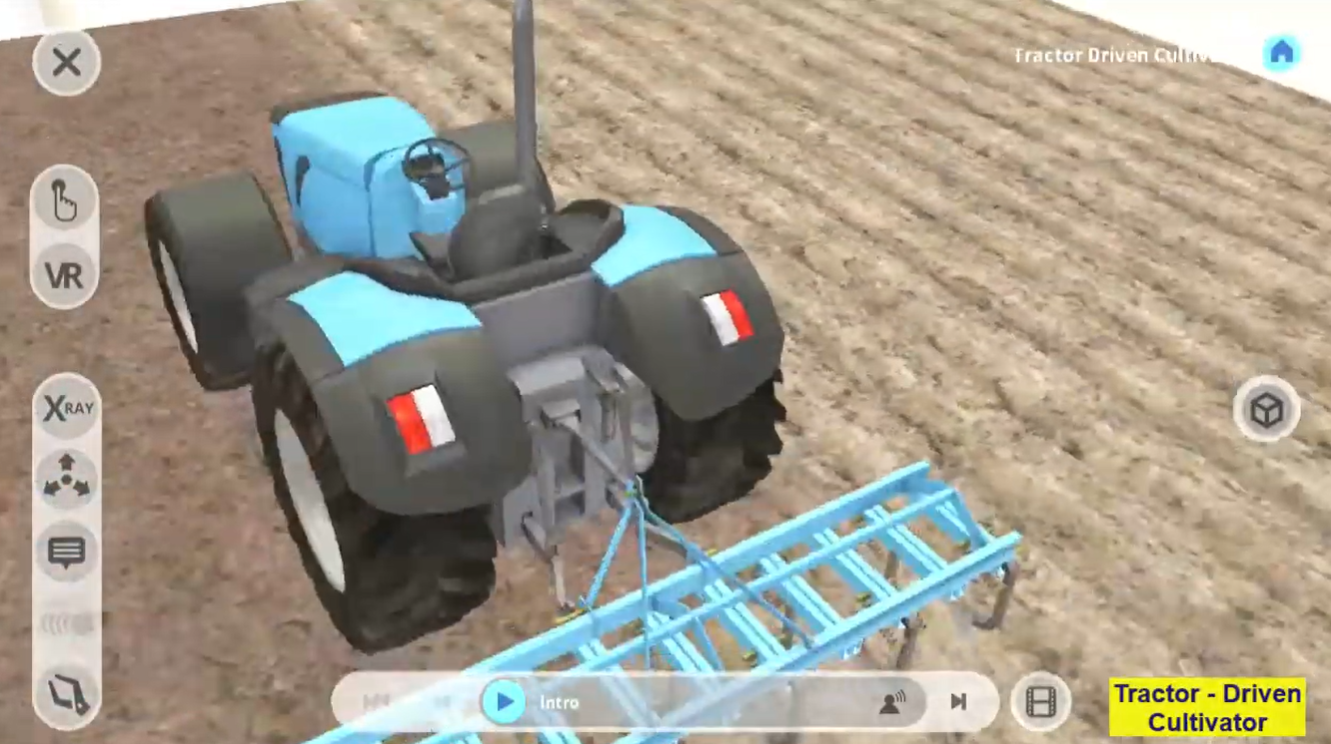
AR/VR Classroom: Technology and Agriculture

Students can now take the front row seat in their own AR/VR classroom, to examine how technology has changed the farming industry over the course of the century.

Over centuries, the growth of agriculture contributed to the rise of civilizations. Before agriculture became widespread, people spent most of their lives searching for food—hunting wild animals and gathering wild plants. About 11,500 years ago, people gradually learned how to grow cereal and root crops, and settled down to a life based on farming. Today, agricultural methods often vary widely around the world, depending on climate, terrain, traditions, and available technology. Focusing on the changes in technology used in agriculture, the lesson takes a look at what technological advances affect agriculture today. Students can now examine how farming techniques changed due to mechanization, describe different basic farming methods used in different parts of the world,c explain why some growing practices are used in some areas but not in others, and grow food using different growing methods.

Take a step into the AR/VR classroom to experience this hands on, immersive lesson on agriculture and technology today by just clicking the links below

An Introduction to Ploughing

An Introduction to Modern Day Sowing Tools

Using the Tractor on a Modern Day Farm

Looking more lesson ideas or classroom inspiration? Visit our collection of lesson highlights today!

Hands on IV Insertion Training in AR and VR

How are healthcare training providers using AR and VR on EON-XR to create true to life, hands on IV insertion training for clinicians?

Inserting, monitoring and maintaining intravenous (IV) access are essential components of nursing,with an estimated 50- 70% of patients having some form of IV access device inserted as part of their treatment.  Yet it is not without risk. When done incorrectly, complications can range from mild local irritation to blood stream infections associated with significant mortality and morbidity. Therefore it critical that clinicians are trained in the administration of an IV, to reduce and prevent complications.

In this series of hands-on immersive lessons created wholly on EON-XR, students can now learn to locate veins subject to IV insertions and perform the procedure in a safe, risk-free environment. Alongside the procedural instructions, students will also learn how to define the key terms associated with IV insertions, explain patient considerations when inserting an IV and explain how to document IV insertions. Students will have multiple opportunities to practice their IV insertion, venipuncture, and infection control techniques first hand in the EON-XR skills laboratory. This course can be delivered in a blended online classroom alongside practical instruction to allow students to combine theory with application, extending the learning opportunities beyond the classroom.

To start learning how to perform an IV insertion in AR and VR, please click here. You can also browse through our lesson highlights for a wealth of classroom and lesson inspiration on EON-XR.

Navigate Ancient Rome in AR and VR

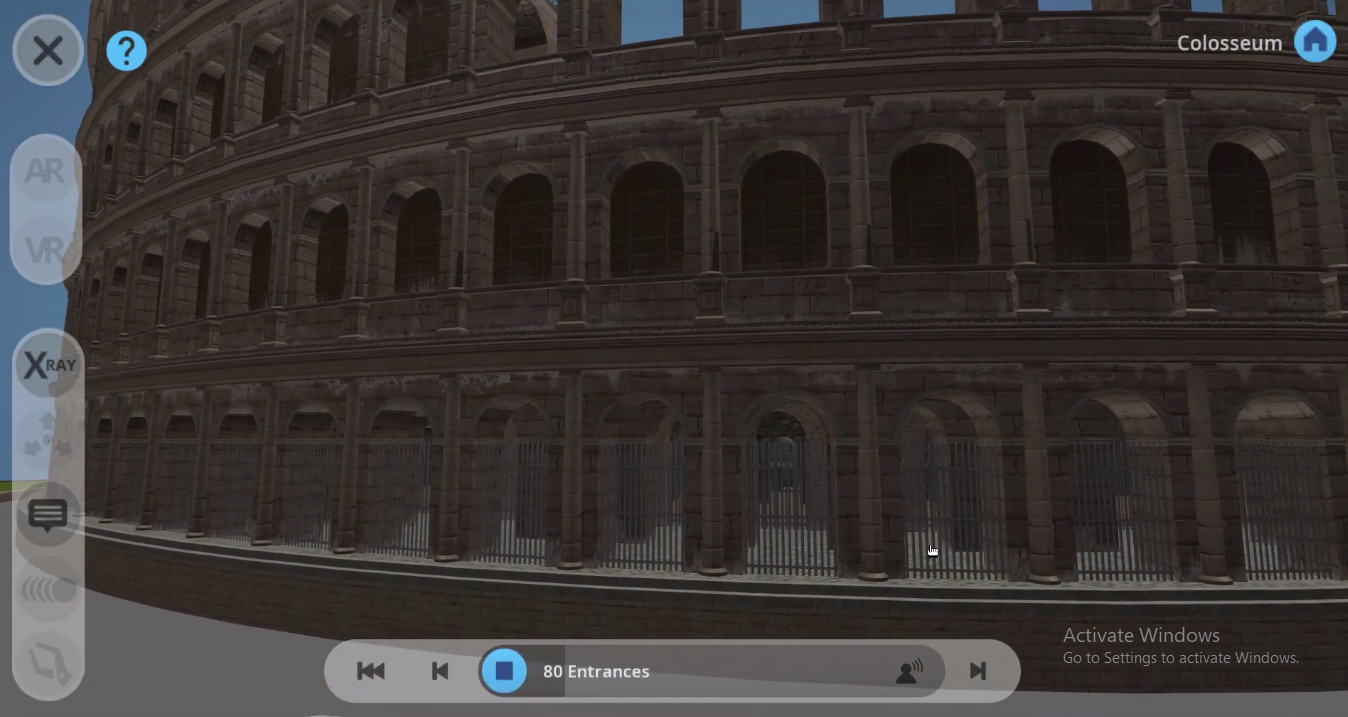
Navigate Ancient Rome in AR and VR and visit the Colosseum on EON-XR to explore the development and urbanism of the ancient city. The Colosseum, originally the Flavian Amphitheatre, is an elliptical amphitheatre—the largest ever built in the Roman Empire—in the center of Rome, Italy. Capable of seating 50,000 spectators, the Colosseum was used for gladiatorial contests and public spectacles such as mock sea battles, animal hunts, executions, re-enactments of famous battles, and dramas based on Classical mythology.

On EON-XR, students can investigate the Colosseum well as the typical public and private buildings of Greek and Roman cities, to better understand the social and cultural contexts of these buildings and consider how the ideals and ideologies of its culture was expressed in the built environment.

To navigate Ancient Rome in AR and VR in a full, hands on immersive learning experience, please click here.

Here are some teaching ideas to get started, or browse our lesson highlights for more classroom inspiration!

Roman Architecture

Examine architectural plans to understand the development of architecture in Ancient Rome, from the city’s founding to recent times. Consider construction, landscape design and urban planning.

Applied Heritage Conservation Techniques

Consult the architectural plans for the Colosseum in exploring conservation issues affecting built heritage. Consider structural issues, as well as interior and exterior decorative finishes.

City Futures

Explore cultural, environmental, economic, social and political contexts of urbanism – in the past, present, and future – using Rome as a case study.

Urban History

Using examples of sites in Rome, focus on specific features and concepts of space and community, considering the social, economic, political and environmental processes of urban change.

Ancient Cultures

Explore and analyze architectural plans and documents to uncover issues around immigration and mobility, social identities and urban spaces of Ancient Rome

Powertrain Systems Online AR and VR Lesson

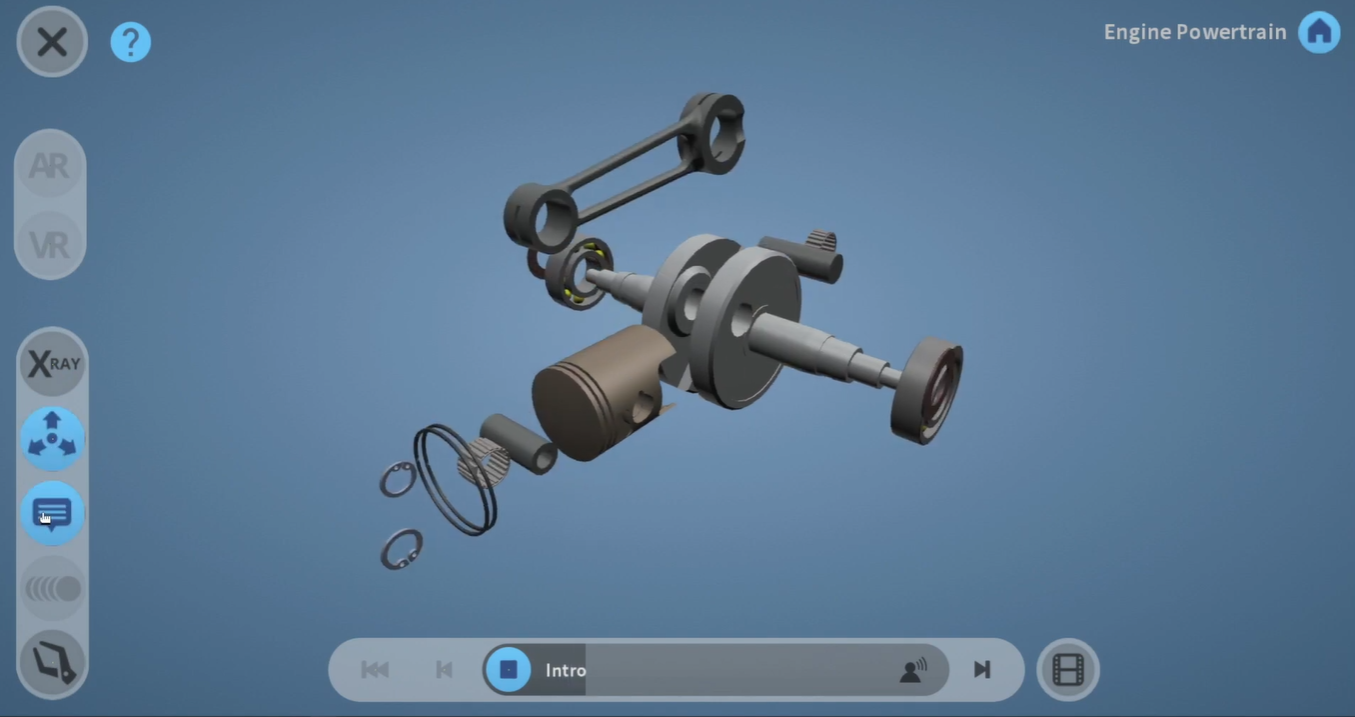
In this lesson developed by University for Business and Technology, students are now learning how powertrain systems work up close in AR and VR. This lesson uses a variety of features on EON-XR, including recorded instruction, interactive animation and quizzes. This powertrain systems lesson  in AR and VR modes demonstrates the concept of how ever moving component is critical to the engine’s success. It also illustrates how its sole objective is transforming kinetic energy into propulsion motion and uses EON-XR to bring the otherwise static textbook and images to life. In this example, EON-XR is intended to help students understand the basic functions of the powertrain. But from mathematics to chemistry to biology with some creativity, AR and VR can be incorporated to practically any subject.

For a full, immersive hands on learning experience please click or browse through our lesson highlights for more classroom inspiration!

The Artistic Mind of Wassily Kandinsky in AR and VR

With EON-XR, here is chance to explore the inner workings of Wassily Kandinsky in AR and VR to see what he hears. In this immersive lesson created by the University for Business and Technology, Kosovo, the viewer is transported into the mind of Wassily Kandinsky to explore his choices of colors and shapes and consider the artistic decisions made in this piece.

Russian-born Wassily Kandinsky pioneered abstract art in the late 19th and early 20th centuries. His unique perspective on the form and function of art emphasized the synthesis of the visual and the auditory. He heard sounds as color, and this unusual perception was a guiding force in the development of his artistic style. Like many of Kandinsky’s work in the 1920s, the painting Several Circles features geometric shapes, more particularly a variety of circles. It was a continuation of his research on the interaction of the main elements of paintings, which included geometric forms, colors, and the relationship between them.

Created wholly on EON-XR, anyone can create a fascinating educational experience to explore a multitude of subjects across art, engineering and the humanities.

To explore the mind of Wassily Kandinsky in AR and VR please click here or browse our lesson highlights for more classroom inspiration.

Retail Science in AR/VR and Impacts on Buying Behavior

Learn more about retail science in AR and VR and the psychology of purchasing behaviour that goes behind a store layout, where there is literally much more than meets the eye.

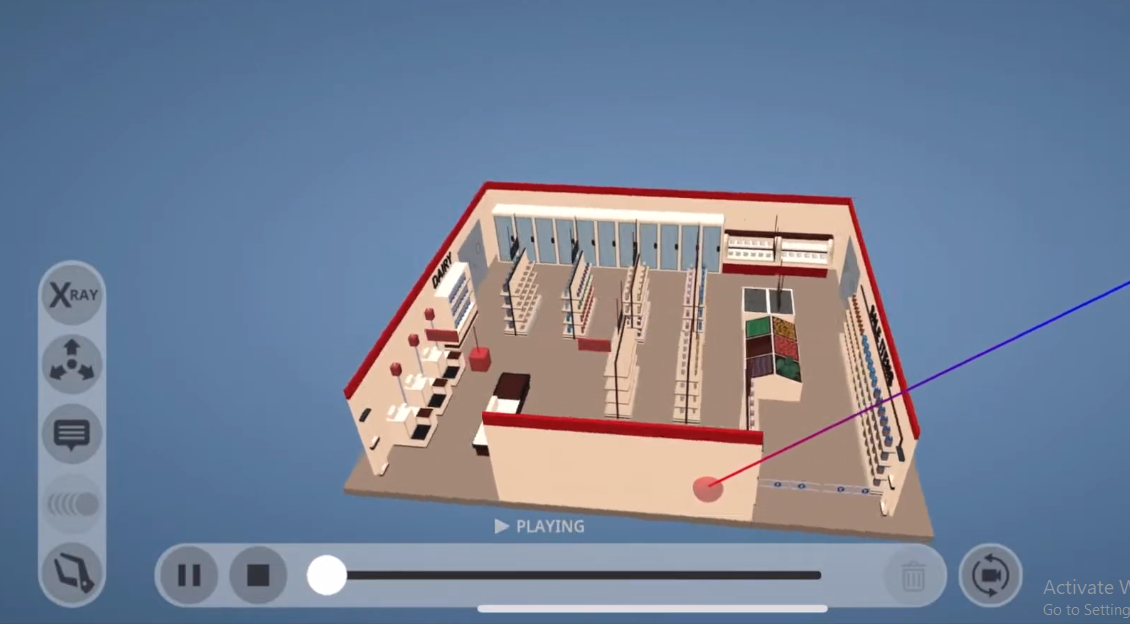
Have you ever walked into the supermarket to buy a loaf of bread only to emerge with two heavy bags at the end of it all? We might think we’re in control of our consumption habits, but retailers know better. In fact, it’s a science. And it is done by manipulating nearly every aspect of out time, from the layout, the smell to the price of the items in order to get you buying what you never really needed.

In this AR/VR lesson, learn how the retail science that goes behind the design of a supermark For example, did you know that grocery stores relegate essential items like milk and eggs at the back of the store, forcing the consumer to wander through aisles to get there?

For a full, immersive hands on learning experience please click here or browse through our lesson highlights for more lesson inspiration!

Artifacts of Ancient Greece in AR and VR

Using EON-XR, students can now learn about the artifacts of Ancient Greece in AR and VR and its importance as a cultural and historical signifier against the backdrop of human civilization.

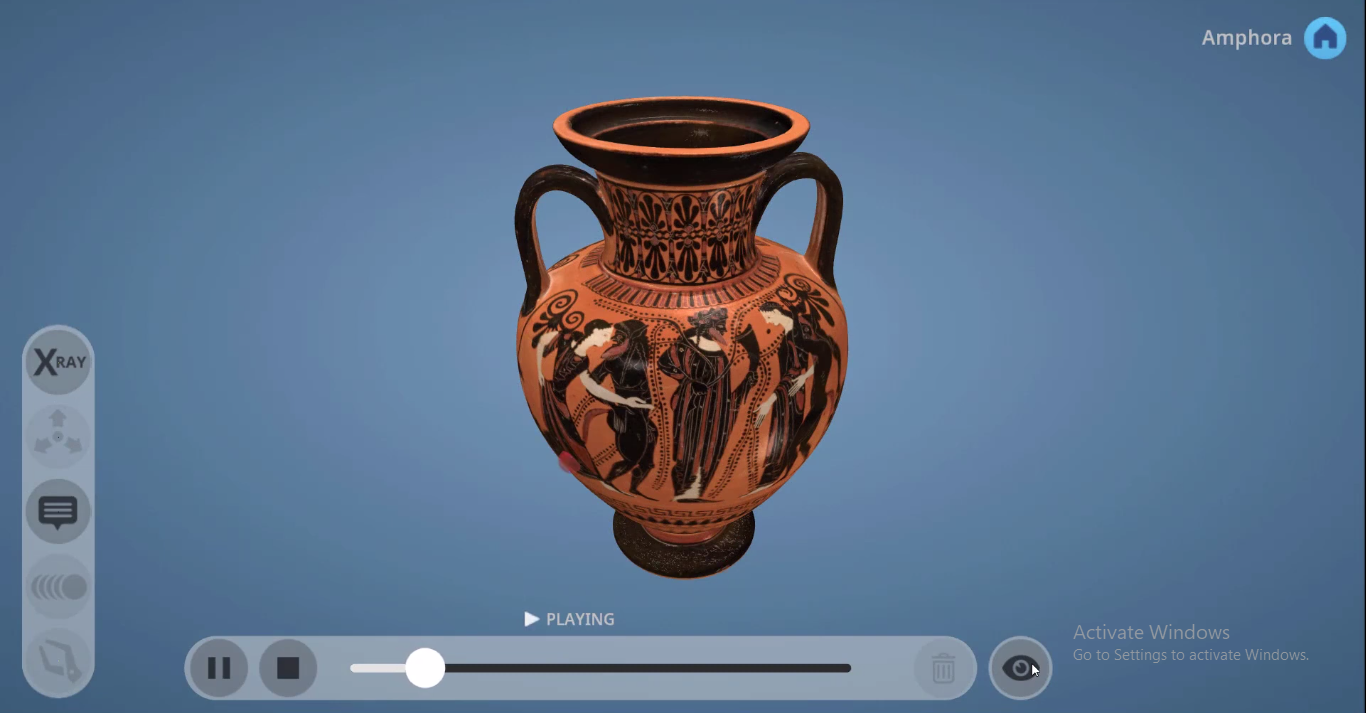
Have you ever wondered how the ancient Greeks made pottery and why they had so many different types? Pottery is one of the most important pieces of evidence for archaeologists to understand the ways people lived in the past. Therefore when we think about artifacts of Ancient Greece, one of the first images that comes to mind are those of Ancient Greek vases or Amphoras; reddish-orange vessels and the iconic illustrations that adorn their surfaces. Essential to everyday life in Ancient Greece, vases had both artistic and functional value, bearing visual messages about religion and culture as well as carrying water, oil, and perfumes.

As wall paintings and other ephemeral forms of decoration did not stand the test of time, these utilitarian objects also serve as an important historical documentation of ancient Greek life and artistic pictorial styles of the artisans who made them. Both rich in craft and full of archaeological significance, Greek vases are important educational materials to view in museums, and serve as impressive collectors’ items that never cease to capture the imagination of audiences.

Learning about Ancient Greece in AR and VR doesn’t end there. Here are some teaching ideas that you could use with this free, hands on immersive learning experience  or browse our lesson highlights for more classroom inspiration.

Conservation and Object Based Learning

Extract evidence from ancient ceramics of their materials, techniques and wider values.

Myth, Art and Empire: Greece and Rome

Study ancient art and society to explore the mythic origins and heroic archetypes of the Greeks and Romans. Think critically about the origins of the Western tradition.

Classical Mythology

Explore narratives of birth and creation, war and the warrior, fire and flood, animals, gods and humans, in order to identify and articulate the relationships between classical myths and the social, religious, and political contexts of their production.

Interpreting the Ancient World

Integrate texts and material remains to understand past cultures, and to interpret textual, symbolic and archaeological evidence in historic and prehistoric periods.

Learn about the Biosphere in AR for a Sustainable Future

How can students learn about the biosphere in AR to perceive global environmental change and create a sustainable future? How do we know that human activity is changing the climate? The biosphere is made up of the parts of Earth where life exists. The biosphere extends from the deepest root systems of trees, to the dark environment of ocean trenches, to lush rain forests and high mountaintops. It is also simply the home of all known life that has ever existed in the entire universe.

In this immersive lesson on EON-XR, students will be able to delve deeply to learn about the biosphere in AR, from the plants and soils, the oceans and rainforests to learn about how Earth systems interact, the effects of climate change, and what our future holds.

Click here for a full, hands on immersive learning experience or browse our lesson highlights for more classroom inspiration!

Iscriviti per ricevere gli ultimi aggiornamenti da noi

Receive the latest news

Sign Up Today!

Be the first to know the latest in AI-assisted XR-based technology for learning and training,
Stay ahead of the curve. Sign up today.