Editar el contenido

Energy
EON-XR Examples

Mitigate California’s power failure concerns amid heat wave

Using EON Merged XR to Mitigate California’s power failure concerns amid heat wave.

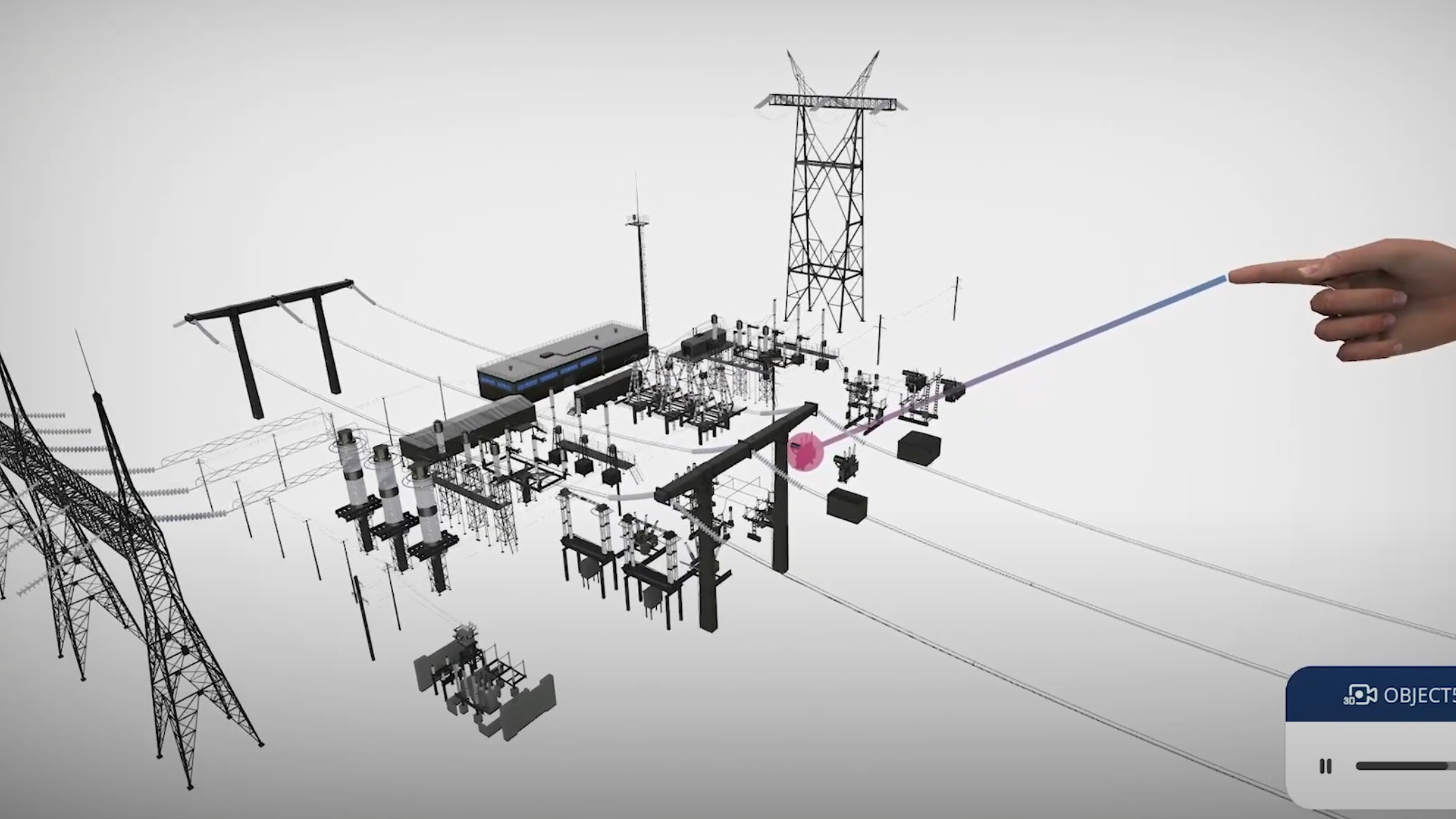
EON’s new Merged XR Product has been designed to enable Energy conservation. EON’s learn, train, perform approach not only trains consumers in scaling back their electricity usage to conserve energy but also can actively issue Live alerts through its IOT digital twin integration when consumers are involuntarily over consuming with hands on guidance how to revert to conserve mode.

The governor issued a state of emergency in 50 of 58 counties and asked residents to cut water usage. California power companies urge conservation amid dangerous heat wave. Many areas will likely see temperatures in the triple digits.
Companies like PG&E and California ISO are encouraging customers to conserve power as the state power grid stands to be overwhelmed. More customers will be relying on cooling energy, especially at night.
As the American West faces a historic heat wave, California power companies are asking customers to consider scaling back their electricity usage to conserve energy as the hot temperatures threaten blackouts. Some steps homes can take include setting thermostats to 78 degrees or higher, avoiding using household appliances that run on a lot of power, and turning off unnecessary lights
Power Trip Troubleshooting

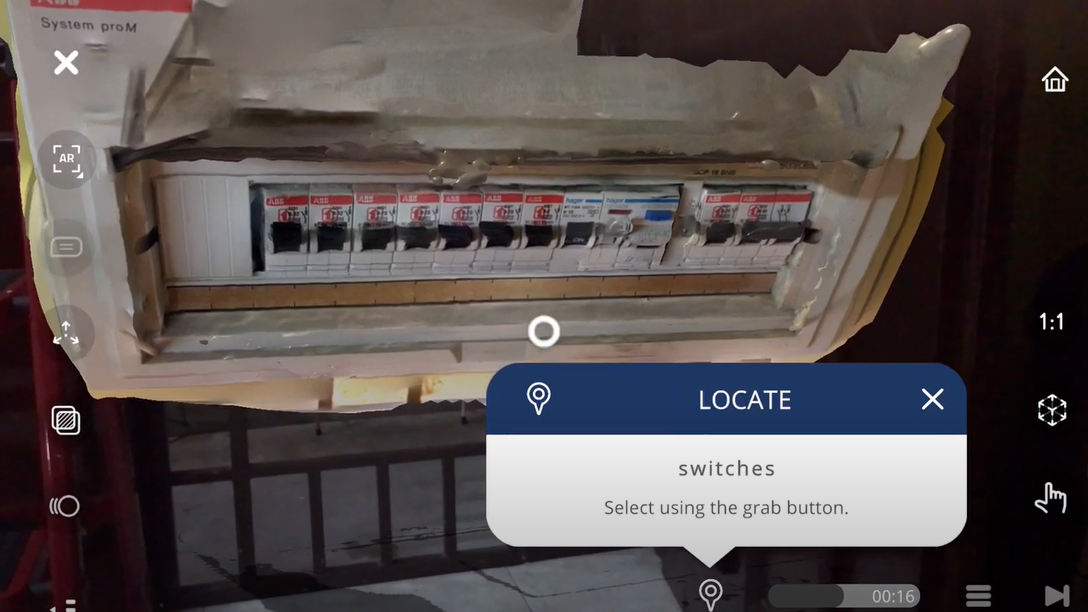
In this application example, we’ll delve into the Energy category to take a look at Power Trip Troubleshooting in a home setting. Constructed and recorded with EON-XR’s 9.0 update, this quick video will show the breadth of possibilities available within our flagship solution. See the simple, smooth, and efficient process of turning real life objects and surroundings into digital XR assets for use in EON-XR in seconds before building complex and immersive lessons in mere minutes. With an abundance of creation features, language and regional settings, and premade assets and lessons, let this example demonstrate exactly what you could be doing with EON-XR.


Proppant Feeder

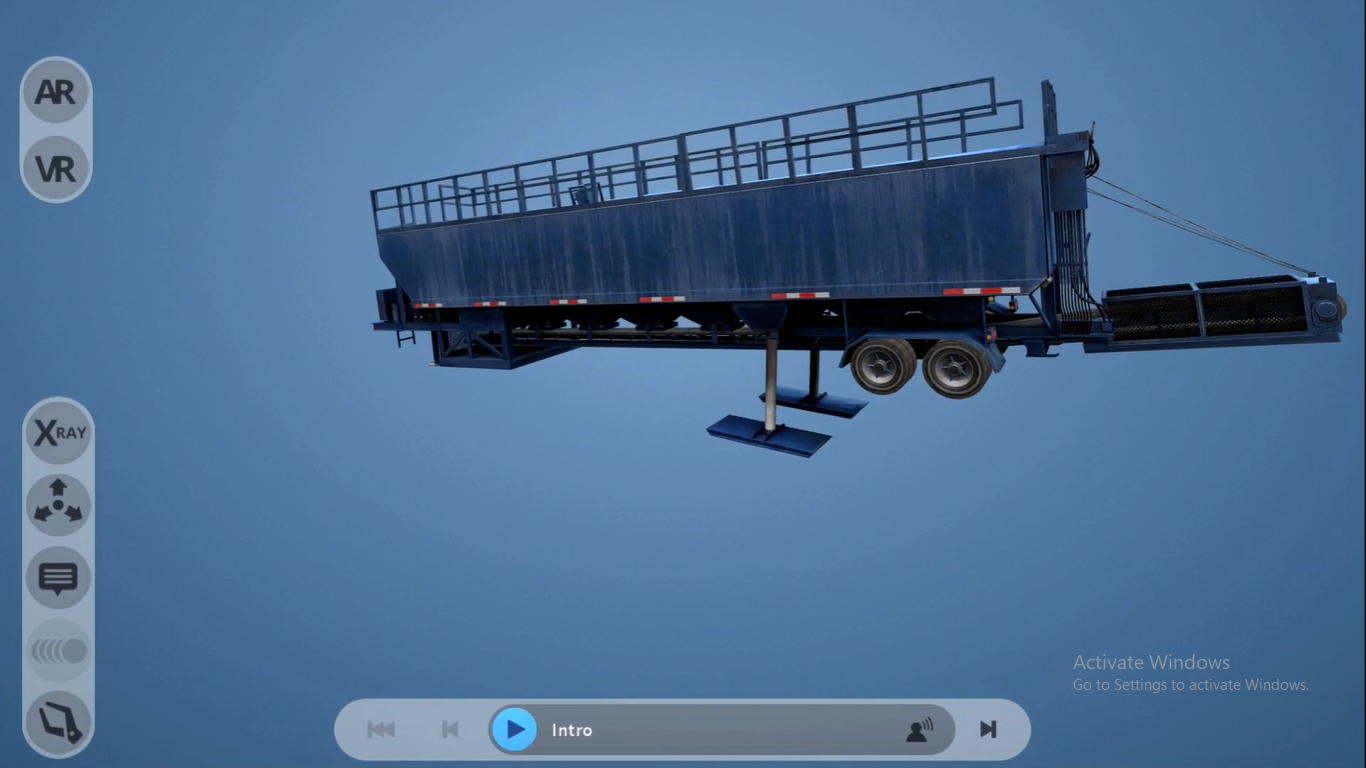
This EON XR application explores the structure and function of a proppant feeder. Through augmented and virtual reality the user can explore and manipulate the proppant feeder. The model can be dismantled and viewed in x ray mode to ensure a thorough view of the proppant feeder. The application also features an embedded video which explains the function of the feeder.

Great for remote and in person training environments, give EON XR proppant feeder application a try.

Propane Tank Safety

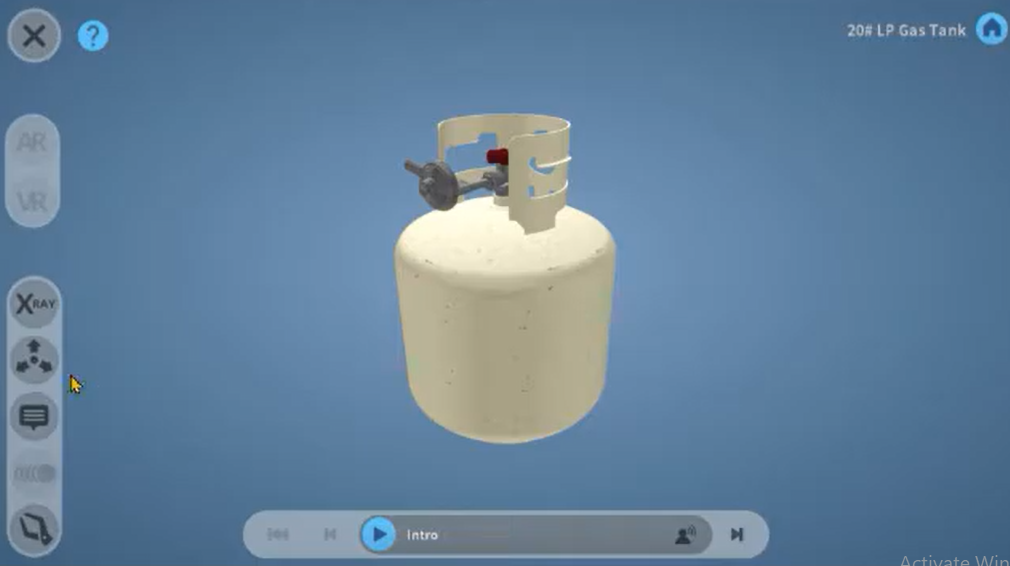
Gas is a necessary resource we use everyday however without proper understanding or education, those everyday uses can lead to high risk scenarios. EON XR features an immersive safety lesson centered on the function and construction of a propane gas tank. In augmented and virtual reality users can learn what components make up a propane tank and each of their functions. The application caters to several engaging learning processes such as parts identification, parts separation, virtual/augmented manipulation and xray mode. The lesson includes videos on proper propane use as well as a quiz to test the users knowledge.

The EON XR immersive safety lesson is great for in person and remote learning scenarios, give the application a try to learn more about propane tank safety.

Fracking Crane

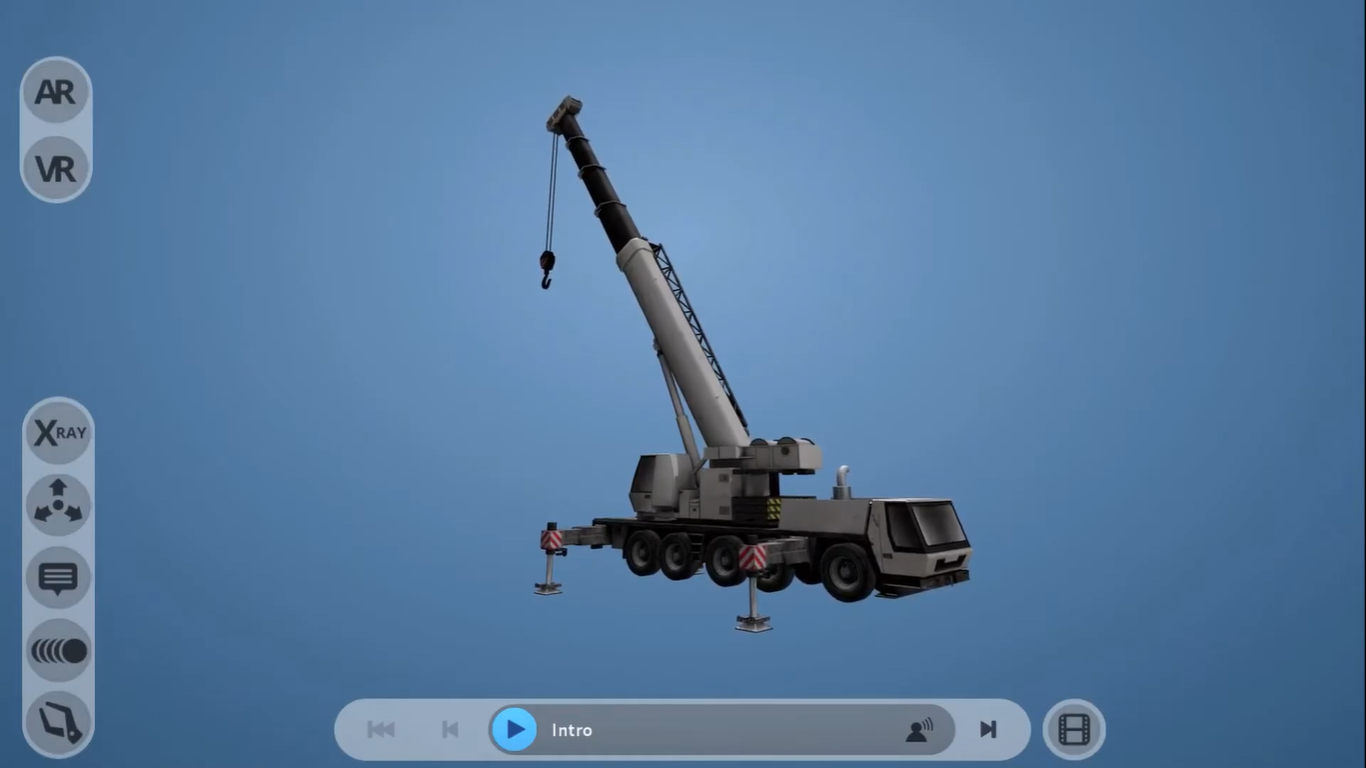
This EON XR application focuses on the physical structure and purpose of a fracking crane. Engage in simulated learning on the application through its augmented and virtual capabilities. The user can also manipulate the model in various ways through the dissection tool, x-ray mode, component identification and animation button. The application also includes a short overview video of the model and a longer video lesson on the fracking process.

EON XR applications can be used remotely due to its mobile capabilities. This is great for on the spot instruction and learning in the field. The application is also suitable for training newer employees on equipment function and purpose before they get to work locations. This improves overall operations understanding and workplace safety.

Give the application a try and learn more about a fracking crane.

Fracking tank

Using EON XR, increase your understanding of the fracking process, specifically fracking tanks. This application uses virtual and augmented reality to provide users with an immersive education experience of the content. The material focuses on the several components of a fracking tank such as the discharge/suction hose, ladder, overflow pipe, and tires. The model can be picked apart by each individual component and viewed in x-ray mode to provide a comprehensive understanding of the entire system. The model is also accompanied by a lesson and educational video which provide factual information regarding the process of fracking.

This application is great for educational purposes within the oil and gas industry, remote and or physical classroom environments.

Enhance your learning and teaching methods, and check out the fracking tank application.

Hands on Virtual Lab: The Conductivity of Acids

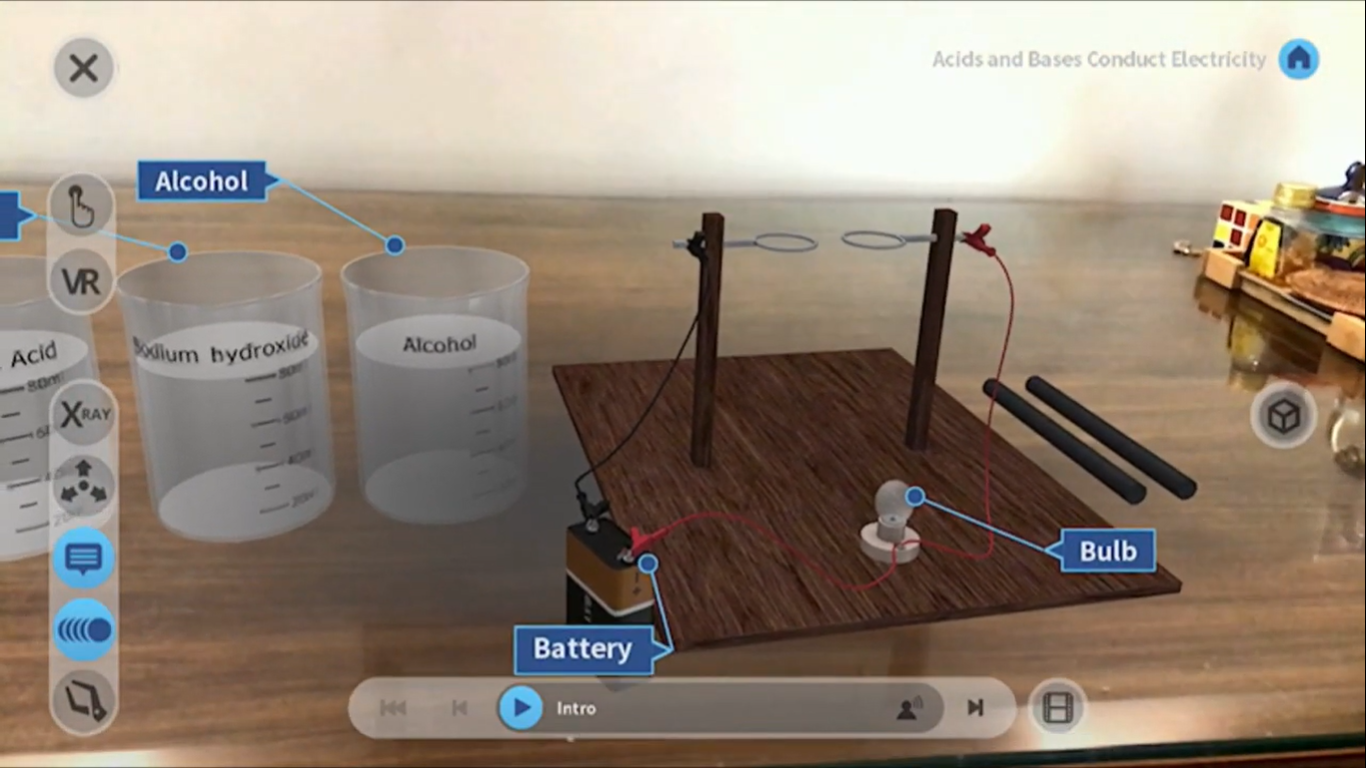
EON-XR allows anyone to create their own hands on lab to simulate experiments at home! In our range of lab lessons, students can probe into a solution to measure the pH, or put in the electrodes to measure the conductivity. In this virtual lab lesson, students can now test the conductivity of various solutions with a light bulb apparatus at home.

Utilizing an acid and a base to generate electricity is a valuable experience for students to realize the importance of electrochemical power sources and develop fundamental knowledge related to energy and electrochemistry.

Using EON-XR, you can now create your own custom lab experiments and lessons utilizing our vast library of more than 1 million assets for remote learning.

Delve into and access the virtual experiment on EON-XR today.

Related:

Virtual Lab for Chemistry Students

What’s the Diff? The Function of the Differential Gearbox

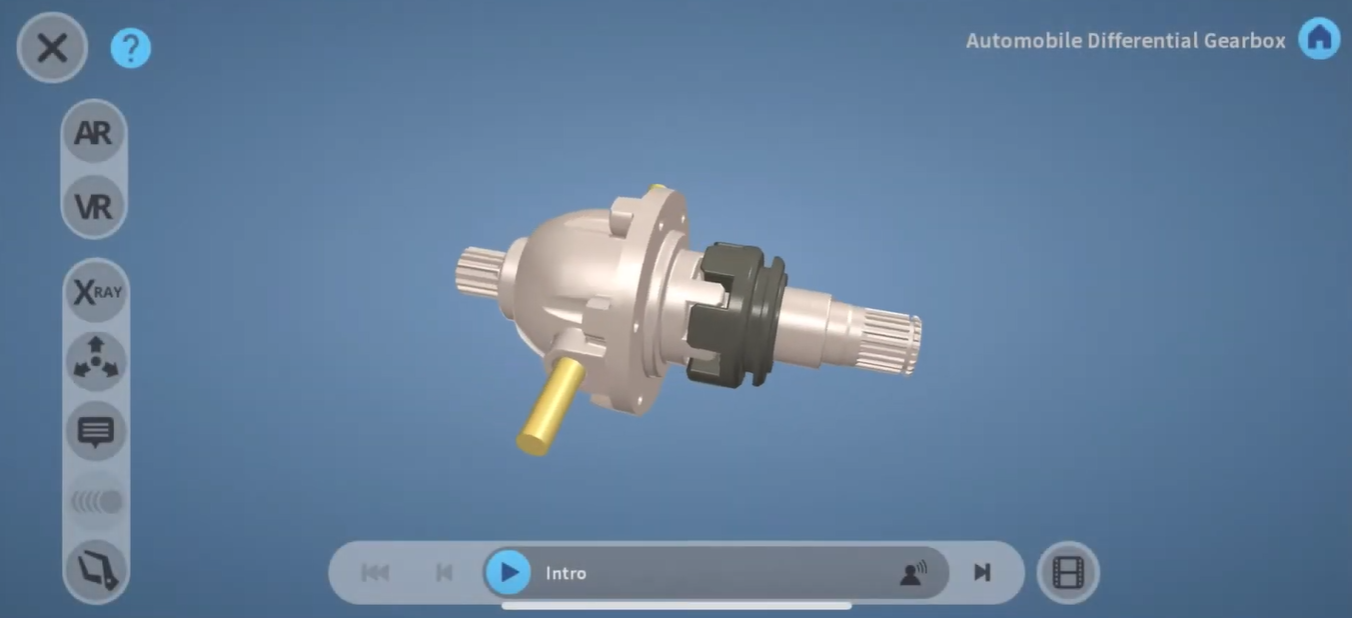
What is a differential gearbox and what do they do? And how do the individual parts actually do their job? In this lesson, students are introduced to an important engineering element in AR/VR—the differential gearbox.

As part of a lesson series created by the University for Business and Technology, this interactive 3D lesson module on EON-XR distills  a complex topic into an easily understandable visual lesson. Starting with a visual introduction of why a differential is necessary, it allows a student to easily process what’s going on underneath the skin of the car. While there are a handful of different kinds of differentials in use today, the underlying principal remains the same for mechanical differentials.

At the end of the lesson, students are able to

1. Identify the components and explain the functions and the maintenance procedures for differentials

2. Identify differential design variations.

3. Describe the principles of the  differential.

4. Understand basic service and repair of a differential.

This lesson was created as part of the EON Reality Self-Directed Learning initiative at the University for Business and Technology, allowing for deeper learning through immersion and student created content.

Experience this hands on, immersive lesson on EON-XR today.

How Does a Four Stroke Engine Work?

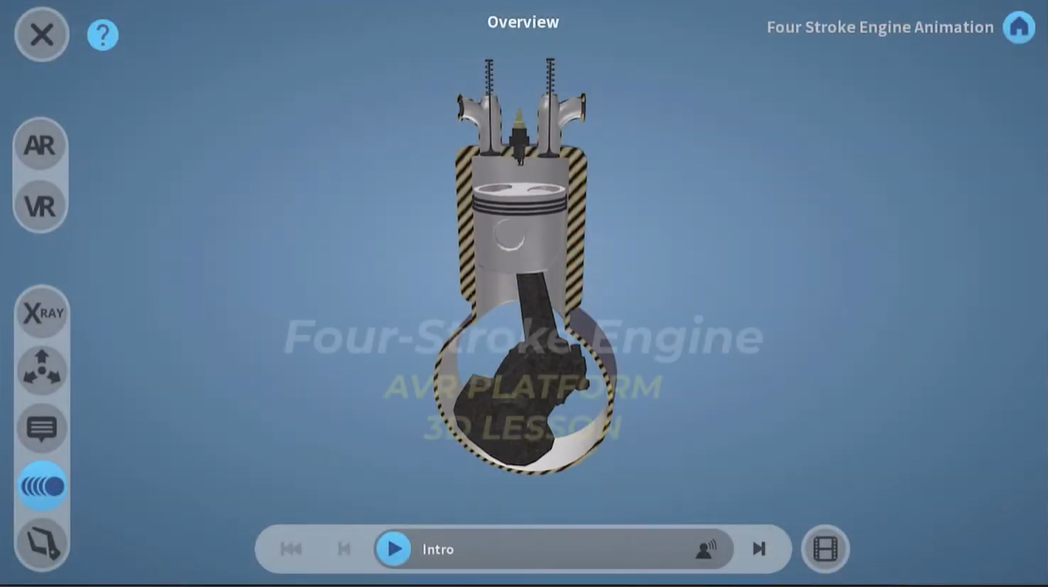
A four stroke engine is a very common variation of an internal combustion engine. Most modern internal combustion-powered vehicles are four strokes, powered by either gasoline or diesel fuel. During engine operation, pistons go through four events to achieve each power cycle. The definition of an event is an up or down piston motion. Upon completion of the four events, the cycle is complete and ready to begin again.

What are the four events?

  1. Intake stroke: The piston moves downward to the bottom, this increases the volume to allow a fuel-air mixture to enter the chamber.
  2. Compression stroke: The intake valve is closed, and the piston moves up the chamber to the top. This compresses the fuel-air mixture. At the end of this stroke, a spark plug provides the compressed fuel with the activation energy required to begin combustion.
  3. Power Stroke: As the fuel reaches the end of it’s combustion, the heat released from combusting hydrocarbons increases the pressure which causes the gas to push down on the piston and create the power output.
  4. Exhaust stroke: As the piston reaches the bottom, the exhaust valve opens. The remaining exhaust gas is pushed out by the piston as it moves back upwards.
Understanding how this  engine works and knowing some key related parts and terminology is important for working on any vehicle. In this lesson created by University for Business and Technology, students are introduced to basic four stroke  engine parts, theory and terminology and understand the operating principles of four stroke internal combustion engines. Experience the hands on, immersive lesson for yourself today or browse through our archive of applications for more classroom inspiration!

Suscríbase para recibir nuestras últimas actualizaciones

Receive the latest news

Sign Up Today!

Be the first to know the latest in AI-assisted XR-based technology for learning and training,
Stay ahead of the curve. Sign up today.