Edit Content

Education
EON-XR Examples

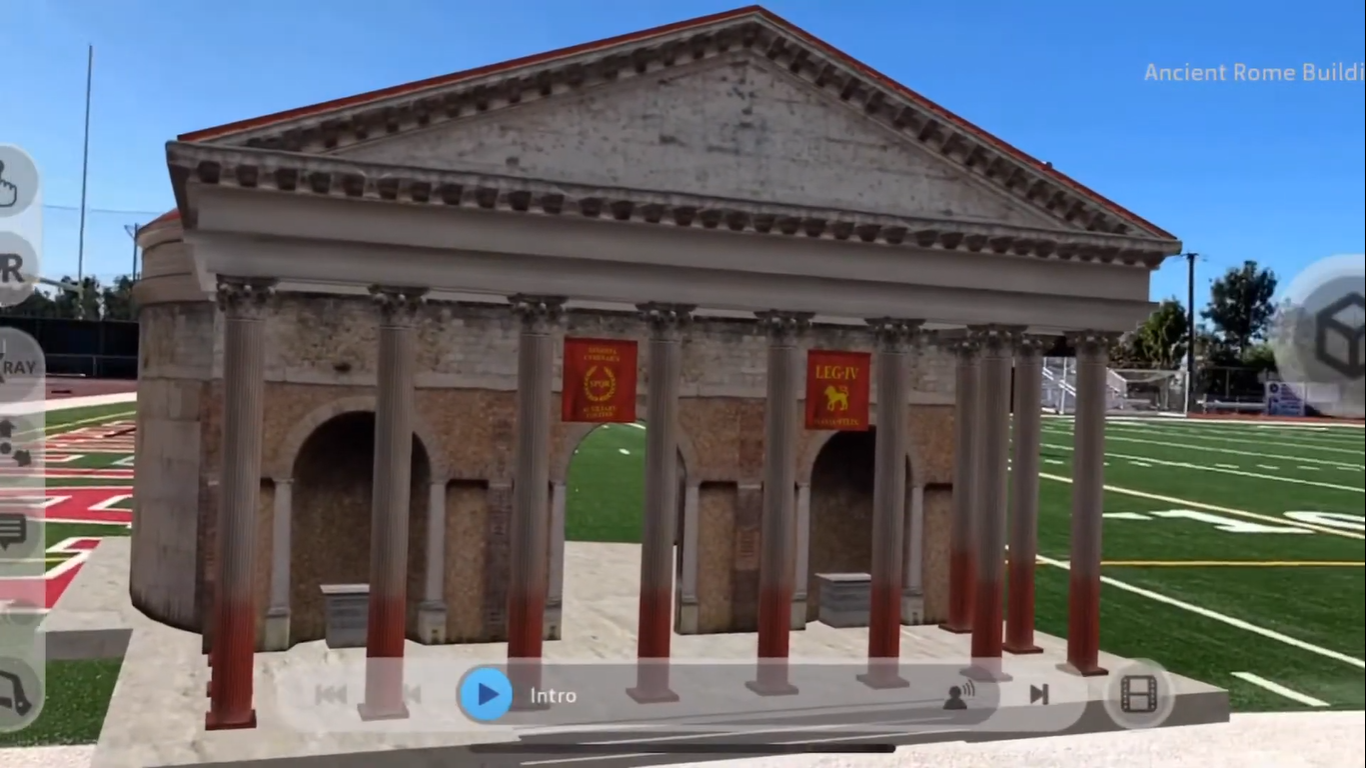
AR Roman Pantheon

Experience an immersive history lesson on the Roman Pantheon through EON Reality’s augmented reality solutions on EON-XR.

The Pantheon  is a former Roman temple, now a Catholic church (Basilica di Santa Maria ad Martyres or Basilica of St. Mary and the Martyrs), in Rome, Italy, on the site of an earlier temple commissioned by Marcus Agrippa during the reign of Augustus (27 BC – 14 AD). It was completed by the emperor Hadrian and probably dedicated about 126 AD. Its date of construction is uncertain, because Hadrian chose not to inscribe the new temple but rather to retain the inscription of Agrippa’s older temple, which had burned down.

The building is cylindrical with a portico of large granite Corinthian columns (eight in the first rank and two groups of four behind) under a pediment. A rectangular vestibule links the porch to the rotunda, which is under a coffered concrete dome, with a central opening (oculus) to the sky. Almost two thousand years after it was built, the Pantheon’s dome is still the world’s largest unreinforced concrete dome. The height to the oculus and the diameter of the interior circle are the same, 43 metres (142 ft).
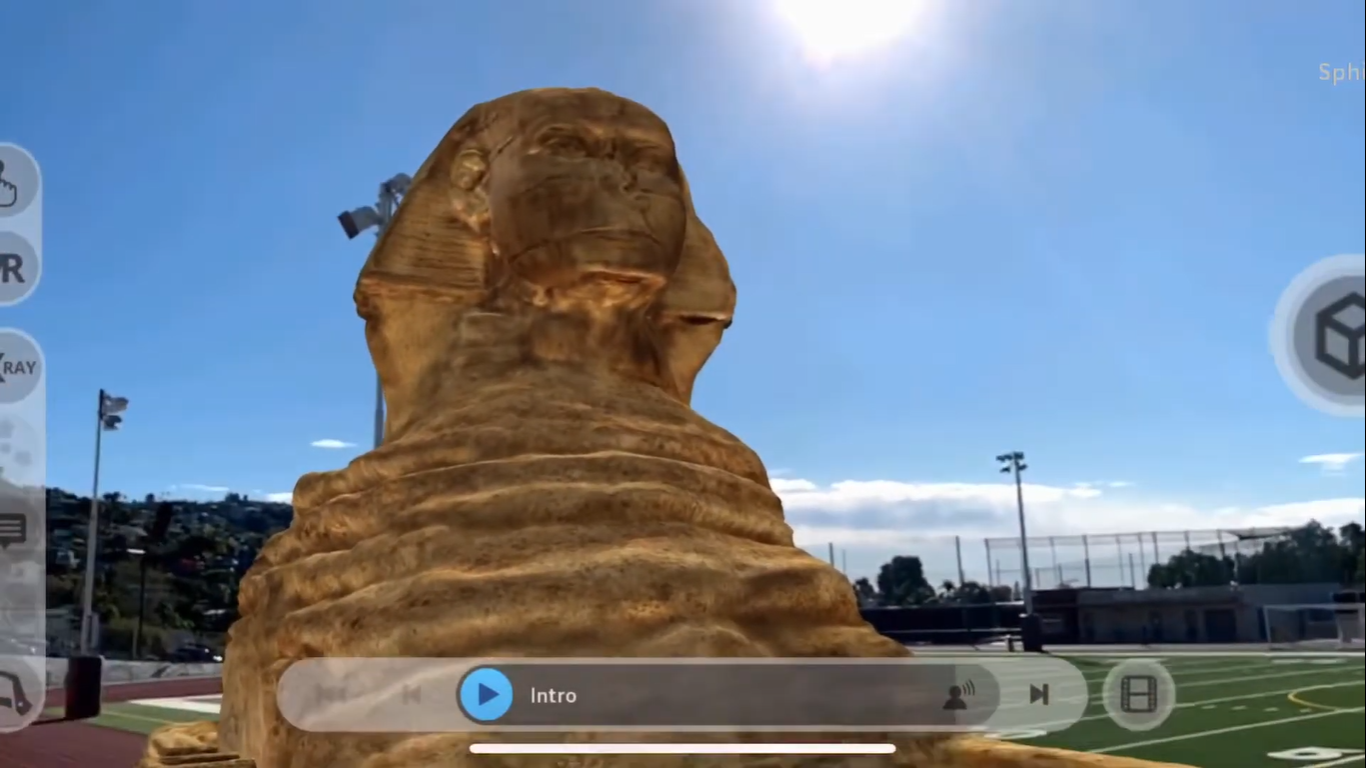
Students Create Sphinx mythical creature in Augmented Reality

The Great Sphinx of Giza, commonly referred to as the Sphinx of Giza or just the Sphinx, is a limestone statue of a reclining sphinx, a mythical creature with the body of a lion and the head of a human. Facing directly from West to East, it stands on the Giza Plateau on the west bank of the Nile in Giza, Egypt. The face of the Sphinx is generally believed to represent the pharaoh Khafre.

Cut from the bedrock, the original shape of the Sphinx has been restored with layers of blocks.It measures 73 m (240 ft) long from paw to tail, 20 m (66 ft) high from the base to the top of the head and 19 m (62 ft) wide at its rear haunches. It is the oldest known monumental sculpture in Egypt and is commonly believed to have been designed, sculpted, and constructed by ancient Egyptians of the Old Kingdom during the reign of the pharaoh Khafre (c. 2558–2532 BC)

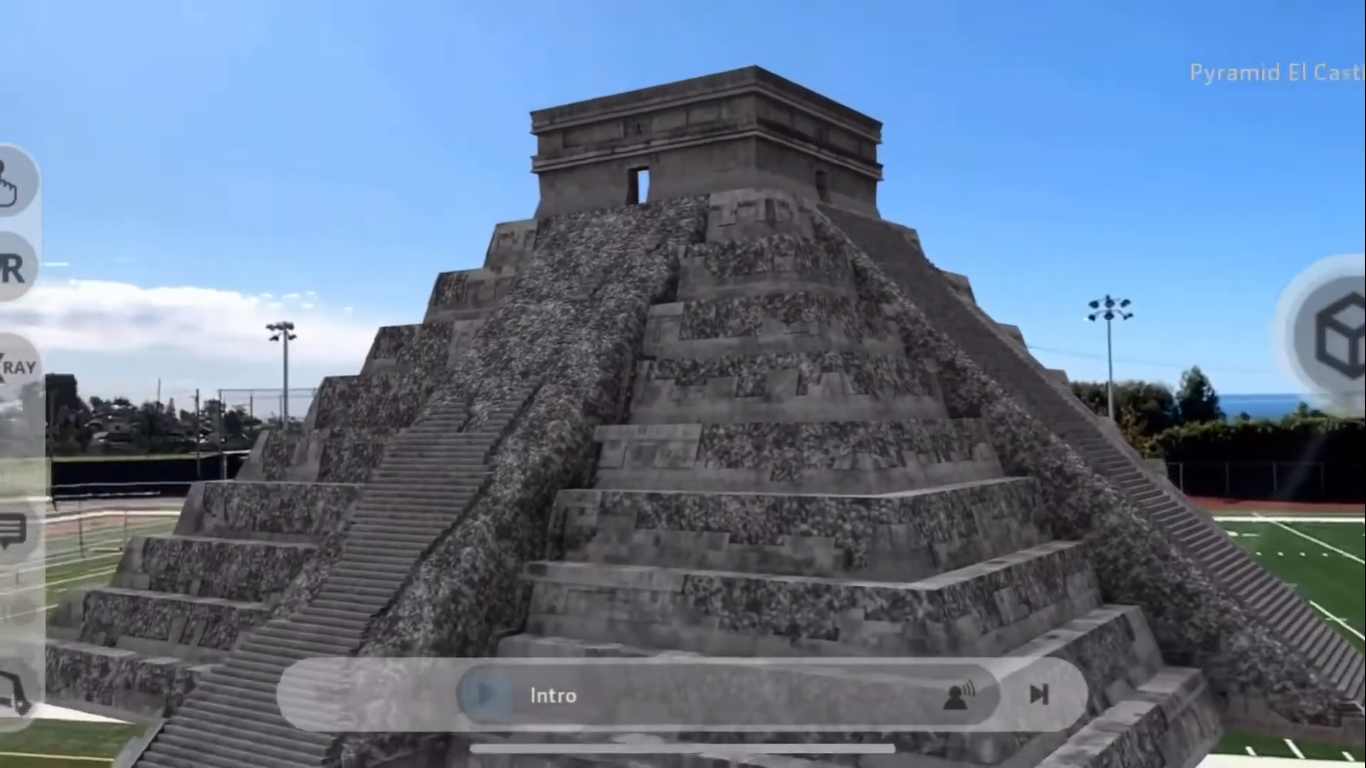
AR Temple of Kukulcan

Take part in a virtual history lesson featuring the Temple of Kukulcan to enhance your learning experience through augmented reality.

El Castillo, also known as the Temple of Kukulcan, is a Mesoamerican step-pyramid that dominates the center of the Chichen Itza archaeological site in the Mexican state of Yucatán. The building is more formally designated by archaeologists as Chichen Itza Structure.

Built by the pre-Columbian Maya civilization sometime between the 8th and 12th centuries CE or AD, El Castillo served as a temple to the god Kukulkan, the Yucatec Maya Feathered Serpent deity closely related to the god Quetzalcoatl known to the Aztecs and other central Mexican cultures of the Postclassic period.

The pyramid consists of a series of square terraces with stairways up each of the four sides to the temple on top. Sculptures of plumed serpents run down the sides of the northern balustrade. Around the spring and autumn equinoxes, the late afternoon sun strikes off the northwest corner of the pyramid and casts a series of triangular shadows against the northwest balustrade, creating the illusion of a feathered serpent “crawling” down the pyramid. The event has been very popular and is witnessed by thousands of visitors at the spring equinox, but it is questionable whether it is a result of a purposeful design, because the light-and-shadow effect can be observed, without major changes, during several weeks around the equinoxes. Each of the pyramid’s four sides has around 91 steps which, when added together and including the temple platform on top as the final “step”, may produce a total of 365 steps (the steps on the south side of the pyramid are eroded) (which is equal to the number of days of the Haab’ year)

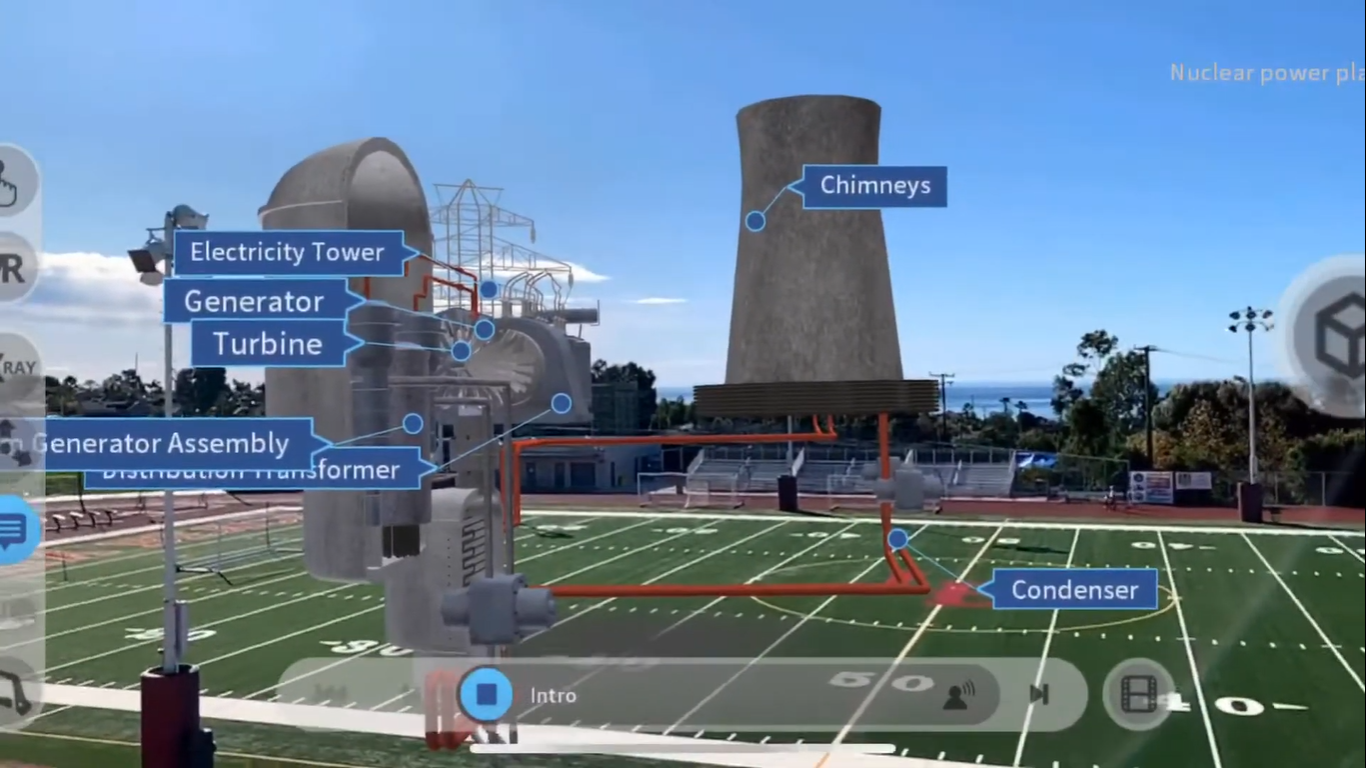
AR Nuclear Power Plants

The EON Reality EON-XR Platform promotes self guided learning by providing virtual based lessons that can be accessed anywhere.

The Nuclear Power Plant Accidents in Remote Augmented Reality Lesson is a study A nuclear and radiation accident and is defined by the International Atomic Energy Agency (IAEA) as “an event that has led to significant consequences to people, the environment or the facility”. Examples include lethal effects to individuals, radioactive isotope to the environment, or reactor core melt.”The prime example of a “major nuclear accident” is one in which a reactor core is damaged and significant amounts of radioactive isotopes are released, such as in the Chernobyl disaster in 1986. The impact of nuclear accidents has been a topic of debate since the first nuclear reactors were constructed in 1954, and has been a key factor in public concern about nuclear facilities. Technical measures to reduce the risk of accidents or to minimize the amount of radioactivity released to the environment have been adopted, however human error remains, and “there have been many accidents with varying impacts as well near misses and incidents”.As of 2014, there have been more than 100 serious nuclear accidents and incidents from the use of nuclear power. Fifty-seven accidents or severe incidents have occurred since the Chernobyl disaster, and about 60% of all nuclear-related accidents/severe incidents have occurred in the USA. Serious nuclear power plant accidents include the Fukushima Daiichi nuclear disaster (2011), the Chernobyl disaster (1986), the Three Mile Island accident (1979), and the SL-1 accident (1961).Nuclear power accidents can involve loss of life and large monetary costs for remediation work.

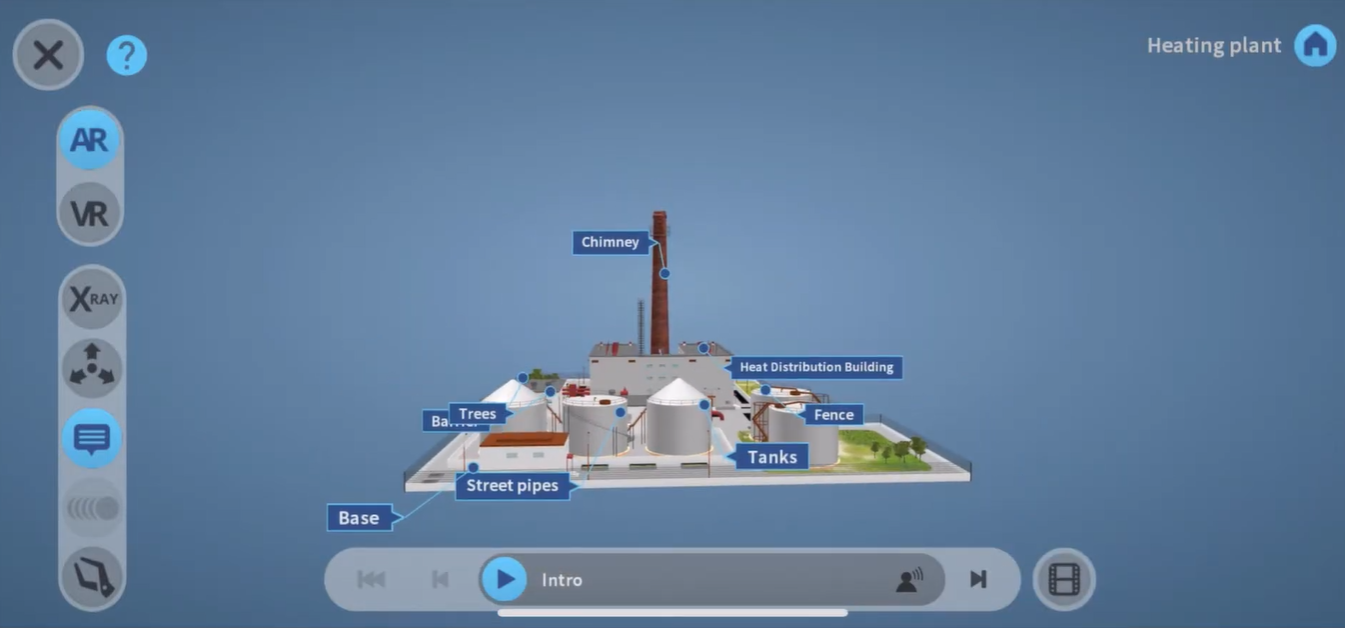
Immersive Walk: District Heating and Cooling Plant

As leaders around the world pledge to reduce carbon emissions, one of the most efficient solutions is the development of modern, climate resilient and low carbon district energy systems in cities. Take an immersive walk through a district heating and cooling plant to understand its role in current climate change actions.

District energy is a proven energy solution, with its roots tracing back to heating greenhouses and thermal baths of ancient Rome. Since the launch of the first commercially successful district heating system in the US in the 19th century, many have been implemented in a growing number of cities around the world. They were first used as a response to energy shortages, fuelled by coal and oil-fired central heat generation but progressively converted to combined heat and power, biomass and renewable generation for greater efficiency and sustainability. Today, in some European and particularly Scandinavian cities, almost all required heating is provided through low-carbon district energy networks.

The improved efficiencies and potential for low-carbon fuel sources in district energy systems make them a key part of climate change and renewable energy strategies in many cities. In this lesson, students can learn about the key elements of a district heating and cooling plant and how renewable energies are integrated into the energy network to reduce carbon emissions.

For a full, hands on immersive learning experience, please click here  or create your own lesson today with the EON-XR Platform.

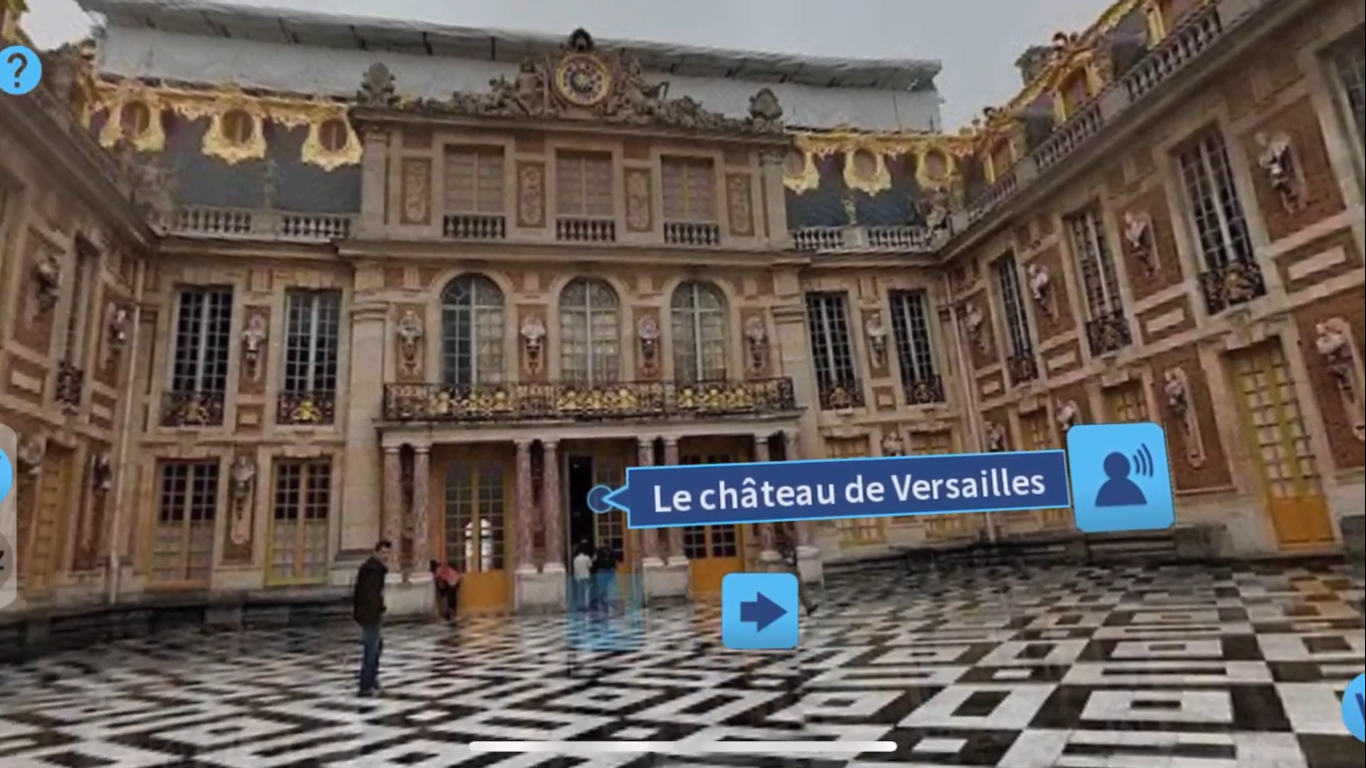
Virtual Tourism Takes You to the Palace of Versailles

Experience virtual tourism at the Palace of Versailles on EON-XR

Once the epicenter of French royalty, the Palace of Versailles was built to impress. Now a world heritage site, the Palace of Versailles has undergone several transformations. It began as a hunting lodge to becoming the central seat of government during the reign of King Louis XIV. The elegant estate was finally abandoned as a royal residence during the French Revolution, when an angry French population demanded for King Louis XVI and Marie Antoinette put an end to their out of touch behavior.

A fascinating trip back in time, this virtual visit to the Palace of Versailles takes you through the Hall of Mirrors and other notable sights within the grounds of the Palace.

These lessons show off the possibilities of learning using Augmented Reality and Virtual Reality. Anyone can transform even the most basic of spaces and subjects into a fascinating educational moment. EON Reality is now offering free access to EON-XR , just click here to start!

Suitable for lessons in :

  • French Language
  • History
  • Architecture

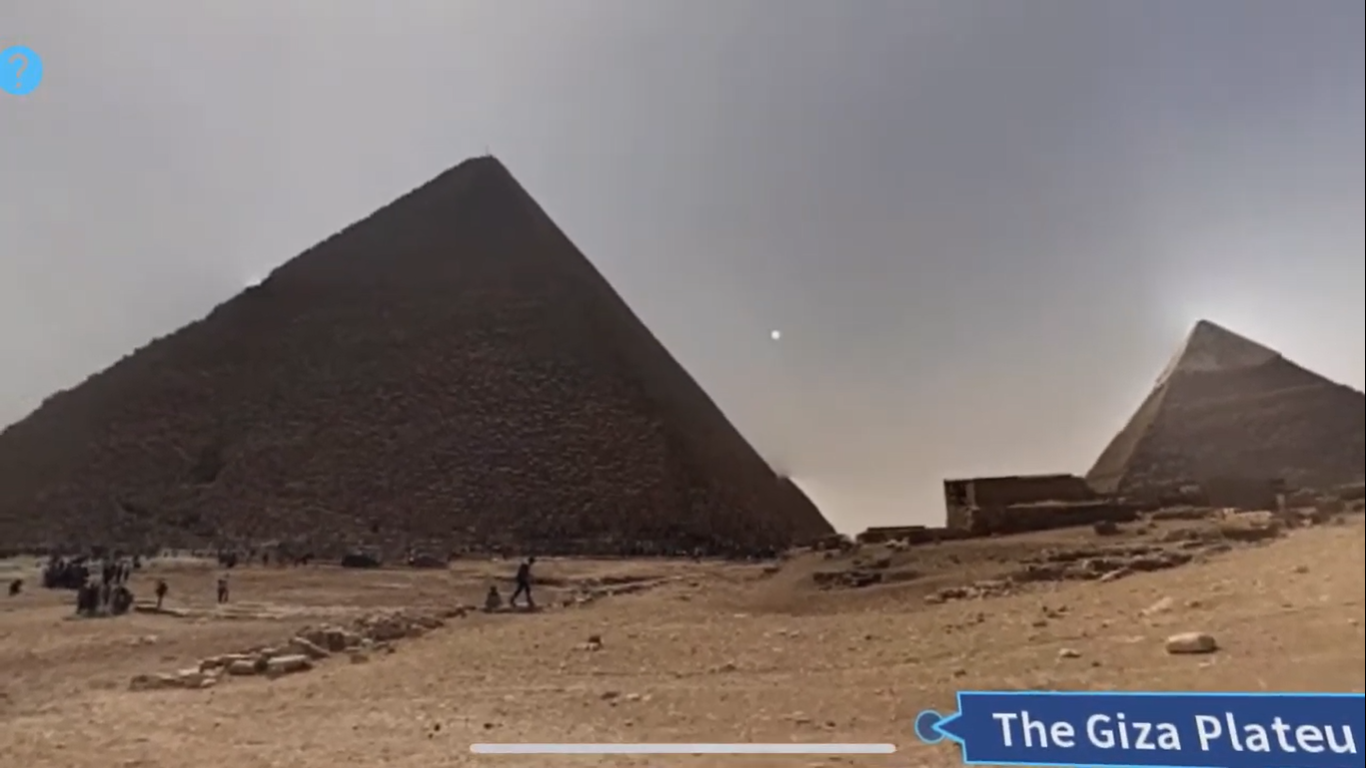
Virtual Tour of the Pyramid of Giza

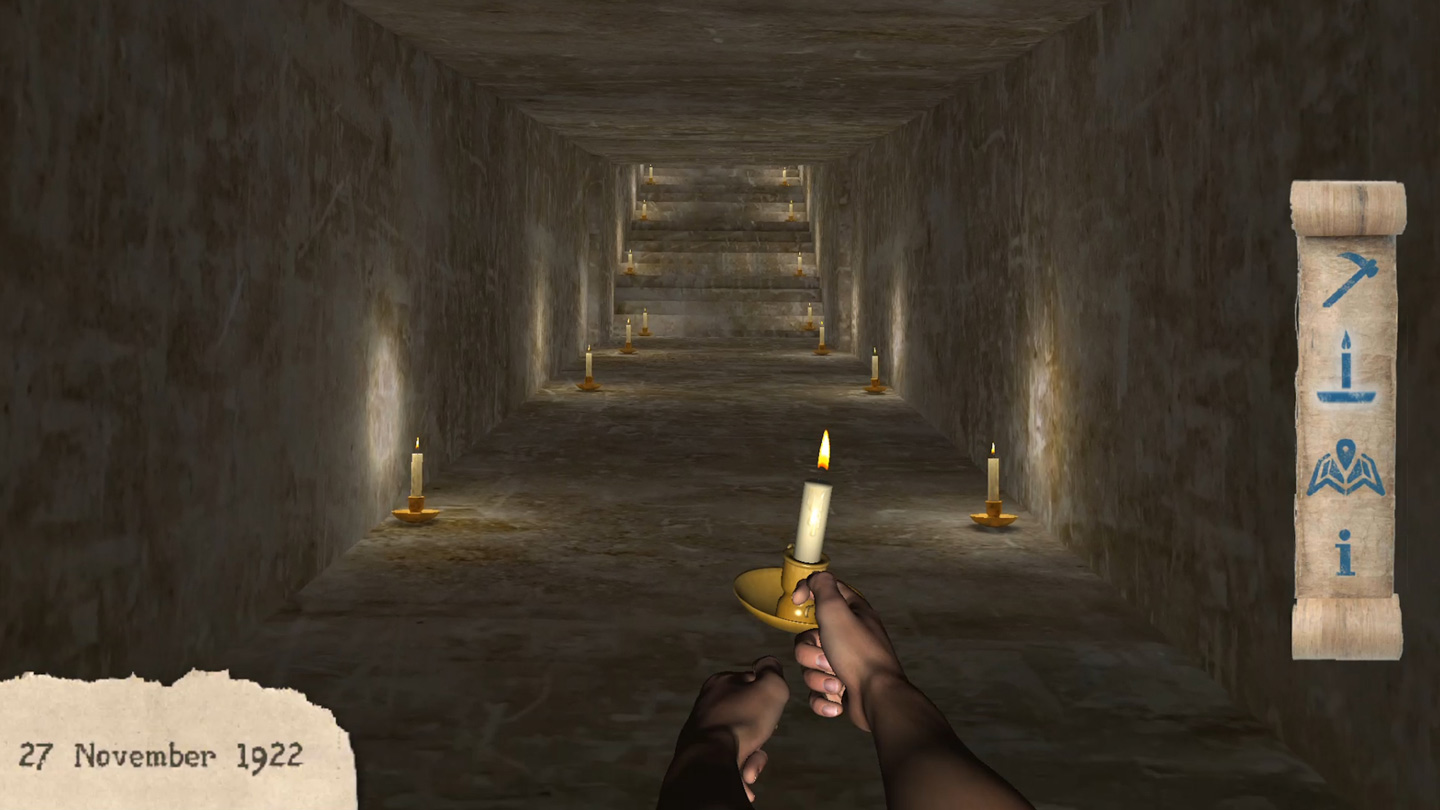
Explore a virtual tour of the Pyramid of Giza from the inside on EON-XR and marvel at the architecture and engineering expertise of our ancient forefathers!

The oldest and largest of the three pyramids at Giza, known as the Great Pyramid, is the only surviving structure out of the famed Seven Wonders of the Ancient World. It was built for Pharaoh Khufu (Cheops, in Greek), Sneferu’s successor and the second of the eight kings of the fourth dynasty.

These lessons show off the possibilities of learning using AR and VR. Anyone can transform even the most basic of spaces and subjects into a fascinating educational moment. EON Reality is now offering free access to EON-XR , just click here to start!

Related: The Egyptian Museum in AR and VR

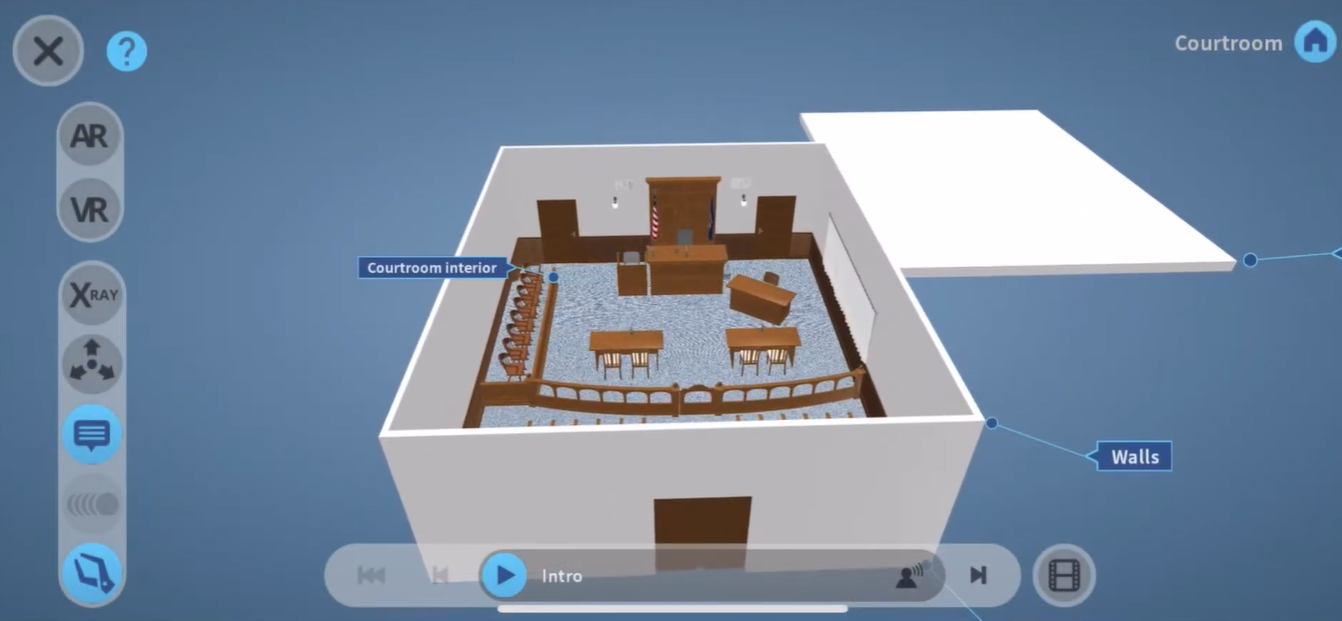
Immersive Learning – An Introduction to the Courtroom in AR and VR

Who’s who and what’s what in the courtroom? Engage in immersive learning for courtroom education in AR and VR.

A courtroom can be an overwhelming place, with its formality, its procedures and understanding the court system in the United States is no easy task. There are multiple layers of jurisdiction, authority, and responsibility that span state, county, municipal and federal boundaries, and employ thousands of individuals in roles such as judges, commissioners, clerks, bailiffs and advocates. Adding to the confusion are the many state and federal regulations, case types, and court processes that make it difficult to understand the role of the courts or to describe their place in the overall administration of justice.

On EON-XR, students can now gain an introduction to the courtroom, learn about appropriate behavior in a courtroom and prepare for the setting of the oral arguments, among other learning possibilities in AR and VR!

For the full, hands on immersive learning experience, please click here.

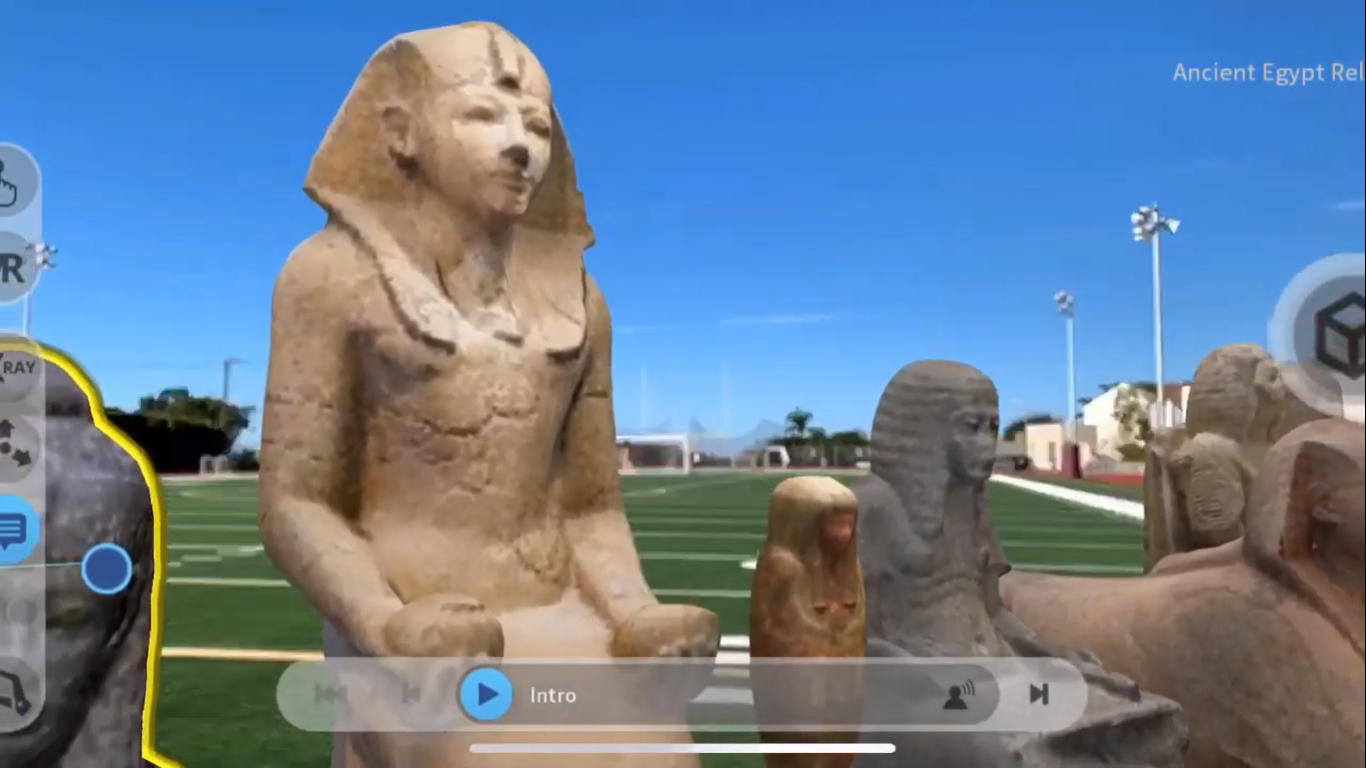
Virtual Tour of an Egyptian Museum in AR and VR

Explore a virtual tour of the Museum of Egyptian Antiquities in Cairo, home to more than 120,000 pieces of ancient Egypt. It was first built in 1835, but was moved many times until it was finally moved to its current place in 1902 Tahrir Square. Here are some key artifacts that EON is bringing to history teachers and students around the globe in AR and VR. Open a new portal to digital learning with more than one million digital assets in our lesson library.

These lessons show off the possibilities of learning using AR and VR. Anyone can transform even the most basic of spaces and subjects into a fascinating educational moment. EON Reality is now offering free access to EON-XR , just click here to start!

Related: Immersive Lesson in Singapore’s Cultural Heritage

Iscriviti per ricevere gli ultimi aggiornamenti da noi

Receive the latest news

Sign Up Today!

Be the first to know the latest in AI-assisted XR-based technology for learning and training,
Stay ahead of the curve. Sign up today.